
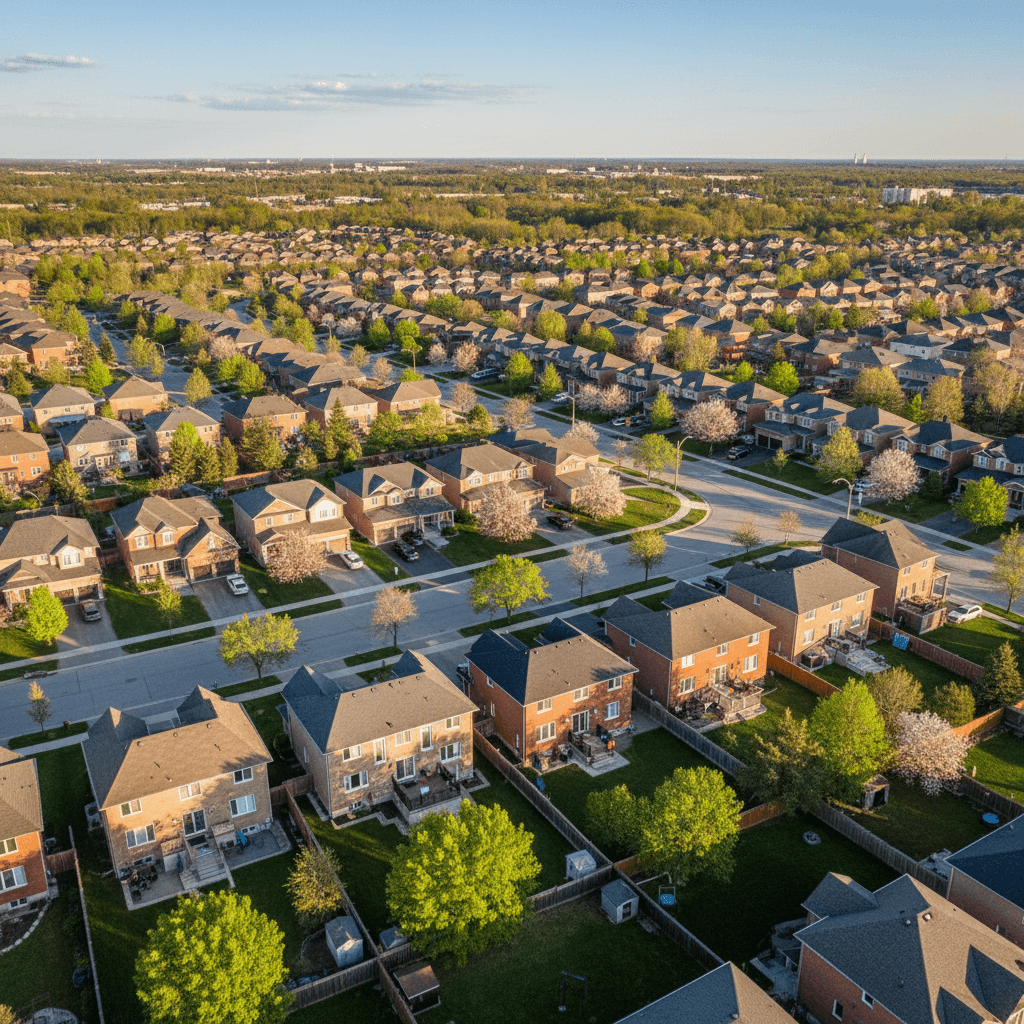
Brampton real estate report guide refers to a step-by-step method for reading local housing data, pricing signals, and neighborhood trends so you can act with confidence. From our office at 470 Chrysler Dr #20 in Brampton, we use VIP reports, an address-based valuation tool, and MLS insights to help buyers and sellers decide faster.
By Maunil Shah • Last updated: May 12, 2026
Brampton Real Estate Report Guide: At a Glance
This guide shows you how to read Brampton’s market like a pro: what metrics matter, how to interpret trends, and which tools convert insights into action. You’ll learn a repeatable method you can use before tours, offers, or listings to avoid surprises and make timely decisions.
Here’s how this complete guide helps you move from “curious” to “confident” fast:
- Understand key market terms, timelines, and signals that often predict outcomes.
- Follow a simple workflow to turn raw numbers into practical next steps.
- Use our on-site tools to shortcut research and prep your move.
- See real examples from recent Brampton buyer and seller scenarios.
Jump to a section:
- What is a Brampton real estate report?
- Why a local report matters
- How to read the report (step-by-step)
- Types of reports and data
- Best practices for buyers and sellers
- Tools and resources
- Case studies and examples
- Value, timing, and offer strategy
- FAQ
- Key takeaways
What Is a Brampton Real Estate Report?
A Brampton real estate report is a curated summary of local housing activity: new listings, sold prices, days on market, absorption, and inventory by property type. It distills MLS data and neighborhood context so you can gauge supply, demand, and momentum before you buy or list.
Put simply, it’s a quick-read snapshot that translates market movement into plain English. We build it around the decisions you’re making next—whether that’s booking a first tour, prepping a listing, or setting a negotiation stance.
- What it covers: listing counts, sold-to-list ratios, median days on market (DOM), and trendlines by houses vs. condos.
- Why it works: a consistent framework prevents cherry-picking single listings and missing the broader pattern.
- How we deliver: through our VIP real estate reports and our address-based "What’s My Home Worth?" lookup for precision on your property.
In our experience, reviewing 5–7 comparable sales within 90 days gives a balanced read on value without overfitting outliers. That comp set size usually covers multiple streets and at least two micro-neighborhoods for context.
Why a Local Report Matters (Brampton + Regional Municipality of Peel)
Local market context drives better timing and stronger offers. In Brampton and across the Regional Municipality of Peel, inventory, commute patterns, and school preferences vary by pocket—so hyperlocal insight improves accuracy, reduces surprises, and speeds up decisions.
The same city can have different rhythms by neighborhood. Semi-detached homes may move quickly in one pocket while condos pause elsewhere. A local lens prevents you from averaging the whole city and then making a decision that fits nowhere.
- Neighborhood nuance: street orientation, builder era, and amenity access influence buyer urgency and DOM.
- Seasonality: spring often sees the most new listings; late summer can be steadier; winter is leaner but sometimes more negotiable.
- Financing climate: small interest rate changes can shift affordability bands; tracking this weekly keeps your plan realistic.
We’ve found that aligning showings with micro-trend windows—like the first 3–5 days of a fresh listing surge—improves access and reduces FOMO. Conversely, when DOM stretches past 30–40 days, sellers should reassess fit, presentation, or timing, not just price.
How to Read the Report: A Simple Step-by-Step
Start with supply and demand, then drill into velocity and value. Read inventory and new listings, compare DOM and sold-to-list ratios, and finish with a targeted comp review. Turn insights into actions: tours, prep, or timing adjustments—then recheck weekly.
- Check inventory and new listings
- Is supply rising or tightening in your target area and property type?
- Momentum tip: a 2–3 week upswing in listings can soften bidding pressure.
- Scan DOM and absorption
- Short DOM bands (0–10 days) often indicate hot pockets; longer DOM suggests negotiation room.
- Absorption (sales divided by active listings) reveals turnover speed.
- Compare sold-to-list ratios
- Ratios above 100% can signal multiple-offer clusters; below 100% implies leverage for buyers.
- Pull a focused comp set
- Use 5–7 comps, within ~90 days, same bed/bath count, similar lot and condition.
- Spot the median, then note upgrades that justify deviation.
- Decide your next move
- Buyers: book tours where DOM is shortest and fit is highest; prepare documentation early.
- Sellers: shore up presentation (lighting, staging zones, curb appeal) before launch.
- Recheck weekly
- Markets pivot quickly; a 7–10 day cadence keeps plans current without noise.
Want hands-on help? Use our site to start your property search or request our free VIP reports. When you’re ready, message us directly to line up showings or a listing game plan from 470 Chrysler Dr #20.

Types of Reports and Data You’ll Use
Use a layered view: a city snapshot for direction, a neighborhood lens for accuracy, and a property-specific analysis for decisions. Combine MLS trendlines, a comparative market analysis (CMA), and your address-level valuation to avoid blind spots.
Different report types answer different questions. Stacking them creates clarity without over-relying on any single metric.
Core report types
- City snapshot: shows overall supply, demand, and pricing direction. Great for timing.
- Neighborhood lens: narrows trends to your micro-area and property type.
- CMA: focuses on similar sold and active listings to estimate today’s likely value.
- Address valuation: our "What’s My Home Worth?" tool gives a starting point you can refine with a CMA.
- Buyer tour brief: a condensed view of fit, risks, and watchouts for 3–5 target listings.
Quick comparison table
| Report Type | What It Shows | When To Use | Action To Take |
|---|---|---|---|
| City Snapshot | Inventory, sales pace, price direction | Deciding when to enter the market | Adjust timeline; monitor weekly |
| Neighborhood Lens | Micro-trends by pocket and property type | Targeting areas; avoiding false averages | Refine search or listing focus |
| CMA | Comparable solds and actives | Pricing a listing or framing an offer | Set list price band; define offer range |
| Address Valuation | Property-specific estimate | Early planning; refinance discussions | Validate with CMA; plan improvements |
| Buyer Tour Brief | Fit, risks, watchouts for 3–5 homes | Before first tours | Prioritize viewings; prep documents |
In our day-to-day work, we see the best results when buyers and sellers keep the stack lean—three layers are usually enough to move from research to action without analysis paralysis.
Best Practices: Turning Data Into Smart Moves
Keep reports simple, update weekly, and translate every metric into a concrete next step. Focus on fit and timing, not just price. Use 5–7 comps, refresh DOM weekly, and pair your plan with financing readiness to shorten cycles and reduce stress.
For buyers
- Pick two neighborhoods and one backup to stay nimble.
- Target 3–5 active listings that fit today, not “someday.”
- Pre-verify documents so you can move when a match appears.
- Watch DOM bands: new this week vs. 14–30 day listings need different offer pacing.
- Use our site tools to save searches and request VIP briefs before touring.
For sellers
- Stage the “first photo” rooms: entry, living area, kitchen. These drive most clicks and in-person energy.
- Refresh weekly: adjust show hours, swap lead photo, and confirm description still matches traffic.
- Balance speed and certainty: in hot pockets, shorter offer windows help; elsewhere, consider flexibility.
- Run an address valuation and then request a CMA to hone your launch band.
- Leverage our featured listings for presentation cues that resonate with Brampton buyers.
Here’s the thing: great outcomes usually come from small, consistent actions over 2–4 weeks—tighten criteria, adjust timing, and iterate with fresh data instead of big swings.
Tools and Resources You Can Use Today
Use three tools: a live property search, an address-based valuation, and curated VIP reports. Together, they compress research time, prevent guesswork, and reveal when to act. Add a quick consult to align financing, tours, or listing prep.
- Start a focused search on our website and save favorites for quick updates via our property search.
- Get a fast estimate with our address-driven home valuation, then request a CMA to refine.
- Download our VIP buyer and seller reports to see neighborhood trendlines and prep checklists.
- Explore a high-level overview of property listing basics across the country in this property listings Canada guide.
- If you’re comparing build timelines, see a pre‑construction process in Brampton for context.
- Thinking like a seller? Skim this Ontario-focused home value primer to frame your questions.
- When you’re ready, request a quick consultation so we can align timing, tours, and offers.

Case Studies and Real-World Examples
Real outcomes come from tight criteria, weekly refreshes, and decisive timing. These Brampton scenarios show how a simple data stack—city snapshot, neighborhood lens, CMA—turns into better tours, cleaner offers, and smoother listings.
Case 1: First‑time buyers choosing between two pockets
- Challenge: Torn between two Brampton pockets with similar commute times.
- Approach: We ran a two-pocket view: DOM bands, list-to-sold ratios, and active inventory over 14 days.
- Outcome: The area with rising new listings and slightly longer DOM gave negotiation space. They bought in week three.
Case 2: Upsizing sellers aligning launch timing
- Challenge: Sellers were ready, but inventory surge was peaking.
- Approach: We tracked the next 10 days for a micro-dip in new listings, refreshed staging, and reset showing windows.
- Outcome: Listing launched into a calmer week with clean traffic and fewer conflicting opens. Stronger offer quality followed.
Case 3: Condo buyer balancing rate news and timing
- Challenge: A condo buyer was hesitating around financing headlines.
- Approach: We kept the same CMA, but narrowed to listings with 10–20 DOM and confirmed documents with their lender.
- Outcome: A near-perfect match surfaced; they moved quickly with ready paperwork.
Case 4: Estate sale requiring precise comp selection
- Challenge: Unique lot and 1970s updates made comps tricky.
- Approach: We extended the comp window, weighted lot/structure more than cosmetic condition, and flagged upgrade allowances.
- Outcome: The strategy preserved value and set buyer expectations clearly, reducing renegotiation risk later.
These are typical patterns we see in Brampton: micro-timing matters, fit beats generality, and a clear process reduces stress during tours and negotiations.
Value, Timing, and Offer Strategy (No Pricing)
Define your value band with 5–7 comps, then tune timing and terms to the pocket’s tempo. In faster areas, readiness and clarity win; in slower areas, flexibility and presentation drive results. Price is one lever—fit, timing, and terms often seal outcomes.
Signals to watch
- DOM clusters: are accepted offers landing within the first week or after day 14?
- New-listing bursts: short surges can change leverage within days.
- Condition vs. structure: kitchens and baths wow, but lot and layout anchor value.
Offer design ideas
- Certainty matters: clear timelines, verified financing, and clean conditions help in hot pockets.
- Flex windows: in steadier zones, flexible closing or inclusions can outperform headline price alone.
- Context notes: include comp references and fit rationale to streamline acceptance.
For sellers, we often recommend a launch checklist that locks down first impressions: exterior touch-ups, lighting consistency, scent-neutral prep, and a lead photo that sets the story. For buyers, we prioritize doc-readiness, area familiarity, and a written plan for offer windows.
Local considerations for Brampton
- Plan tours around transit convenience near landmarks like Torbram Rd at Williams Pky to balance commute checks with showing slots.
- Expect spring to be busier; book earlier show windows to avoid overlaps, and use weekday evenings for calmer walkthroughs.
- When coordinating access near Williams - Zum Bovaird Station Stop SB, pad travel time; peak hours can compress appointment blocks.
Frequently Asked Questions
Buyers and sellers ask about timing, comp selection, and how to use VIP reports. Here are clear, direct answers so you can move forward confidently without guesswork or burnout.
What is the fastest way to get market-ready?
Use a three-step stack: city snapshot for timing, neighborhood lens for accuracy, and a CMA for pricing guidance. Buyers should pre-verify financing and ID, while sellers should stage first-photo rooms. Recheck data weekly to stay aligned with new listings.
How many comparables do I need for a reliable read?
Aim for 5–7 comps with similar bed/bath count, lot size, and condition within ~90 days. If inventory is thin, widen geography slightly but weight the closest matches more. This balances accuracy with recency and helps avoid outliers.
Should I wait for more listings or act now?
Decide based on your pocket’s velocity. If DOM is short and fit is high, readiness beats waiting. If new listings are building for two to three weeks, you may gain options and leverage. We’ll show you the pattern in your exact area before recommending a move.
What’s the difference between an address valuation and a CMA?
An address valuation is a fast, property-level estimate to start planning. A CMA applies human judgment to comparable sales and active listings to refine that estimate. We use both—valuation for speed, CMA for accuracy—then layer neighborhood context for timing.
Key Takeaways and Next Steps
Stack three views—city, neighborhood, CMA—then convert metrics into actions: tours, staging, or timing. Keep it weekly, stay document‑ready, and move when fit appears. Clarity beats noise, and small consistent steps win in Brampton.
- Use a simple, repeatable reading order: inventory → DOM → ratios → comps.
- Favor fit and timing over chasing headlines.
- Keep your plan live with weekly refreshes.
- Leverage our search, valuation, and VIP reports to compress learning time.
Ready to move? Visit our website to start a search, request a valuation, or book a consultation from our Brampton office.
Need a 10-minute walk‑through of your pocket’s latest numbers? Reach out via our contact page and we’ll share a focused brief tailored to your property type and timeline.