
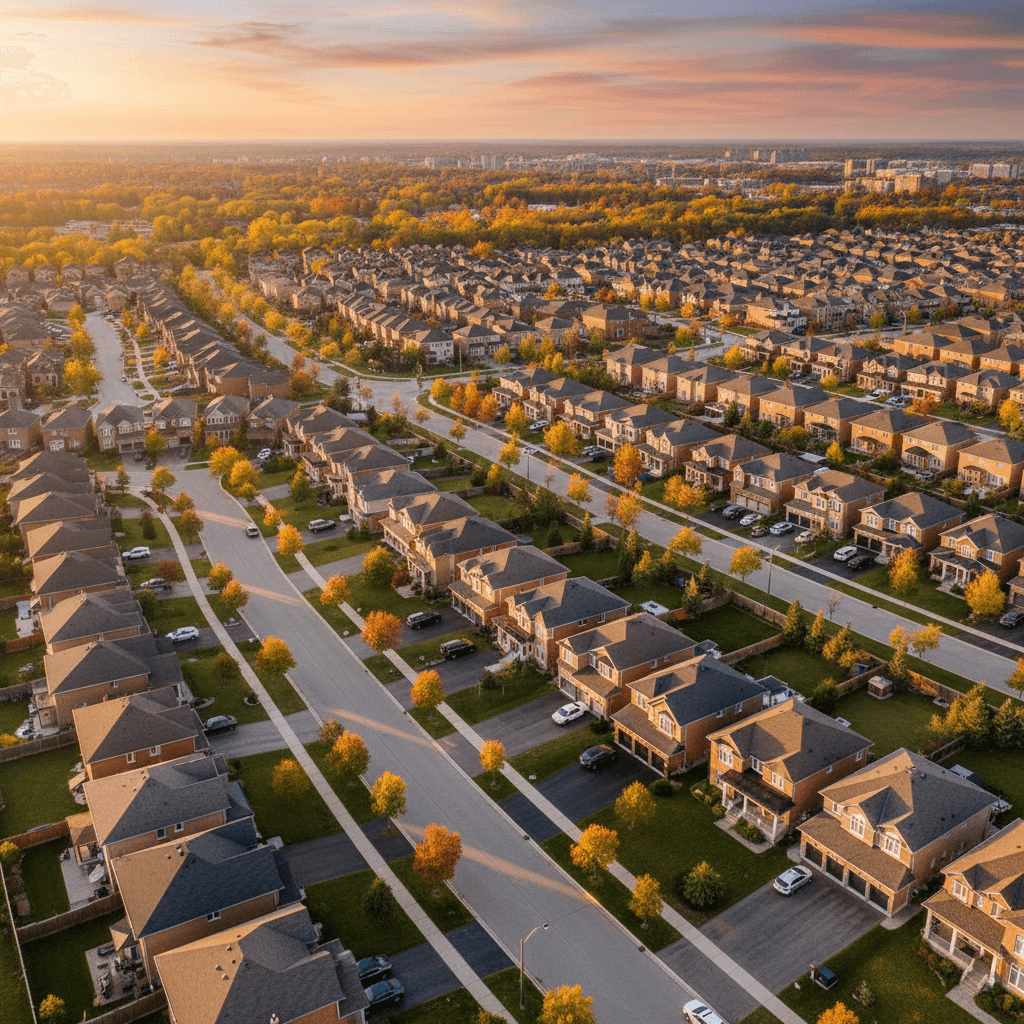
Home valuation by address is an estimate of a specific property’s current market value using its exact street address, recent comparable sales, local demand, and home features. It gives a fast, data-led number you can use to plan next steps. From our Brampton office at 470 Chrysler Dr #20, we use address-level insights to guide pricing for sellers and buyers.
By Maunil Shah — Last updated:
Overview
Address-based valuation uses your exact location, matched recent sales, and property details to produce a current value range. Treat it as a fast orientation tool, then verify with a Comparative Market Analysis (CMA) before you list.
- What you’ll learn: clear definitions, how the math works, and step-by-step actions.
- Why it matters: better pricing cuts days on market and improves negotiation strength.
- Who it helps: Brampton homeowners and buyers making confident, timely decisions.
- What is it?
- Why it matters in Brampton
- How it works (step-by-step)
- Methods compared: AVM vs CMA vs appraisal
- Best practices before you list
- Tools and resources
- Case studies and examples
- Advanced tips
- FAQ
- Key takeaways
- Conclusion
What is home valuation by address?
Home valuation by address estimates today’s likely selling price for a specific property using its exact address, recent comparable sales, local trends, and home attributes. It’s quick and directional, and it becomes listing-ready when paired with a human-curated CMA.
Think of your address as a key that unlocks contextual data: bed/bath counts, finished square footage, lot size, parking, age, and any recorded improvements. Recent sales within a tight radius and time window set the reference points. The model weights recency and similarity to return a value range plus a midpoint.
- Speed: get an instant orientation before you invest time or effort.
- Specificity: address-level inputs beat broad postal-code averages.
- Context: a pro CMA and on-site notes refine the estimate into a list strategy.
In our experience with Brampton sellers, this first read narrows expectations and keeps prep work focused. That clarity often saves weeks of debate on where to start.
Why address-based valuation matters in Brampton
In Brampton, within the Regional Municipality of Peel, street-level nuances influence buyer behavior. Address-based estimates capture micro-differences—lot shape, traffic flow, and transit access—so your list price matches how buyers actually compare homes.
Two near-identical semis on different streets can perform very differently. One backs onto green space; the other faces heavier traffic. A detached on a quiet court may attract more families than the same model on a collector road. Address-level comps surface these premiums and discounts, while citywide averages blur them.
- Timing: rising list-to-sale ratios suggest stronger windows to launch.
- Scope: if comps reward finished basements, you know where to focus.
- Confidence: data-backed pricing reduces late-stage concessions.
Local considerations for Brampton
- Schedule showings to avoid peak traffic near Torbram Rd at Williams Pky; quieter windows improve buyer focus and time-on-site.
- Seasonal photos matter: after snowfall or spring thaw, refresh exterior shots so curb appeal matches reality.
- Proximity to Williams - Zum Bovaird Station Stop SB can lift demand; highlight commute times and route options in remarks.
How address-based valuation works (step-by-step)
An address lookup blends comparable sales, your home’s attributes, and local market momentum. The workflow: enter address, gather details, filter comps, adjust differences, weight recency, factor trends, and return a value range with confidence.
- Enter the exact address: Precise inputs improve comp matching and reduce data gaps.
- Pull property details: Beds, baths, finished area, lot dimensions, parking, age, and upgrades anchor key drivers.
- Collect comps: Recent, nearby sales (similar type and size) set a realistic baseline.
- Normalize differences: Adjust for square footage, bedrooms, basement finish, garage, and corner/cul-de-sac premiums.
- Weight recency: Newer sales typically carry more influence in fast-moving markets.
- Blend local trends: Absorption rate, average days on market, and list-to-sale ratios indicate momentum.
- Return a range: Expect a midpoint with upper/lower bounds; range width signals confidence level.
Here’s the reality: the most accurate models still benefit from human judgment. We remove outliers (estate sales, unusually distressed listings) and incorporate condition notes from a walk-through to put your home in the right comp set.
Methods compared: AVM vs CMA vs appraisal
Automated Valuation Models (AVMs) deliver instant, directional estimates. A Comparative Market Analysis (CMA) is agent-curated and listing-ready. A licensed appraisal is formal and lender-grade. Most sellers benefit from all three at different stages.
| Method | What it is | Best for | Turnaround | Accuracy drivers |
|---|---|---|---|---|
| AVM (address lookup) | Algorithm using comps and public records | Quick orientation before decisions | Instant | Similarity of comps, data freshness |
| CMA (agent-curated) | Handpicked comps plus on-site notes | Pricing a live listing | 24–48 hours | Apples-to-apples matching, condition |
| Appraisal (licensed) | Third-party valuation for lenders | Financing, refinances | Several days | Inspection findings, lender criteria |
We’ve seen the strongest outcomes when a seller starts with an address-based AVM to set expectations, then validates with a CMA that includes showing feedback and condition notes.
Best practices to improve your estimate before listing
Focus on what local comps reward: crisp curb appeal, move-in readiness, and refreshed high-impact spaces. Declutter, repair, neutralize paint, and document upgrades. These steps tighten your value range and reduce time to offer.
Quick wins that influence buyer perception
- Photography first: Bright, wide-angle images increase online saves and showings.
- Entry sets the tone: A tidy, well-lit foyer elevates perceived care and condition.
- Neutral palette: Light, cohesive colors help spaces feel larger and more versatile.
Documentation that strengthens your number
- Upgrade log: Note dates for roof, HVAC, windows, and major appliances.
- Permits and warranties: Organized paperwork reduces buyer doubt.
- Utility snapshots: Typical heating/cooling usage helps compare against comps.
Buyers value certainty. When your home reads “move-in ready,” offers tend to cluster closer to list, which narrows any estimate spread.
Tools and resources to act on your address-based estimate
Stack your tools: start with an instant estimate, add a CMA, review market reports, and set a showing plan. That sequence turns a quick number into a confident pricing and go-to-market strategy.
- Instant estimate: Use an address lookup to anchor expectations before you choose timing or renovations.
- Agent CMA: Request three to five closely matched comps plus on-site notes.
- Market reports: Track absorption, days on market, and list-to-sale ratios monthly.
- Showing plan: Align opens and private tours with local buyer traffic patterns.
For a deeper primer on reading valuation outputs, see this practical overview on how to use a home valuation report. If you’re curious about disclosures and seller readiness, this legal guidance for home sales outlines typical steps. For background reading on Ontario-focused value fundamentals, explore this guide for realtors in Ontario.
Use our site to take action fast: start a location-based property search, request the “What’s My Home Worth?” check, and download VIP buyer/seller reports. These tools help you compare options in minutes—not days.

Free 10-minute valuation consult: Want a fast read on your address-based estimate and the right next steps? Book a quick call and we’ll map comps, timeline, and a showing plan.
Contact Maunil Shah to get started today.
Case studies and examples (Brampton-focused)
Real scenarios show how address-level nuance shapes outcomes. Compare streets, renovations, and timing to see how a quick estimate becomes a confident list strategy with a CMA and on-site review.
Case 1: Semi-detached near a commuter stop
- Signal: The address estimate ticked higher week over week as nearby sales closed above list.
- Action: Seller staged the entry and refreshed lighting; CMA emphasized transit access and parking.
- Outcome: Days on market beat the neighborhood average; negotiations focused on closing date rather than price.
Case 2: Detached with an older roof
- Signal: The estimate range was wide due to condition variance in comps.
- Action: A pre-list inspection and a clear upgrade log reduced buyer uncertainty.
- Outcome: Appraisal aligned with the CMA midpoint; buyer waived an additional roof credit.
Case 3: Condo with standout amenities
- Signal: Building-specific amenities (pool, gym, transit) were underweighted by the AVM.
- Action: CMA replaced generic comps with same-building sales from the last six months.
- Outcome: List price reflected true amenity premiums; traffic was strongest in week one.
The pattern is consistent: tighten comps, document condition, and meet the market where it is. That’s how an instant address estimate matures into a winning sale.
Advanced tips: interpreting your value range
Treat the midpoint as a compass, not a command. Your final list price should reflect micro-location, condition, and market momentum. Lean to the upper bound after fresh renovations; use the midpoint when condition trails comps.
- Range width = confidence: A narrow range suggests strong comp alignment; a wide range flags data gaps.
- Momentum matters: If list-to-sale ratios are rising, pricing in the upper half can shorten time to offer.
- Micro-location: Corner lots, south-facing yards, and quiet courts often earn modest premiums.
- Seasonality: Spring attracts more casual tours; fall buyers are fewer but decisive.
Frequently Asked Questions
Homeowners ask about accuracy, how to improve their estimate, and when to rely on an appraisal. These concise answers address the most common questions so you can act with confidence.
How accurate is a home valuation by address?
It’s directionally accurate and strongest when recent, closely matched comps exist. Use it to set expectations, then confirm with a Comparative Market Analysis (CMA) and, if financing is involved, a licensed appraisal.
What’s the difference between an AVM and a CMA?
An AVM is an automated estimate using address-level data and comps. A CMA is prepared by a real estate professional who handpicks comps, inspects the home, and interprets local trends to recommend a list strategy.
How can I raise my home’s estimated value quickly?
Focus on high-impact refreshes buyers notice: curb appeal, lighting, neutral paint, and minor repairs. Document recent upgrades and gather permits or warranties to build buyer confidence and strengthen negotiations.
Should I price at the estimate’s midpoint?
Use the midpoint as a guide, then factor in condition, micro-location, and current momentum. If comparable homes are selling above list, you may lean higher; if your condition trails comps, price conservatively.
Key takeaways
Use an address-based estimate to orient, a CMA to decide, and showing feedback to optimize. When those layers align, you’re priced to sell with confidence and speed.
- Address-level estimates are fast and useful, but not final.
- Strong comps and clear documentation tighten your value range.
- Local timing and micro-location shift your optimal list strategy.
- A CMA bridges the gap from estimate to executed sale.
Conclusion
Home valuation by address provides a rapid, reality-checked starting point. Pair it with a CMA and local insights to turn a number into a smart, successful sale.
Ready to act on your address? From our Brampton base, we’ll translate your estimate into a step-by-step plan: refine comps, prep the property, and launch a showing schedule tailored to your street. When you’re ready, we’re ready.
Next step: Share your address and we’ll return a quick read and a 30–45 day action plan.