
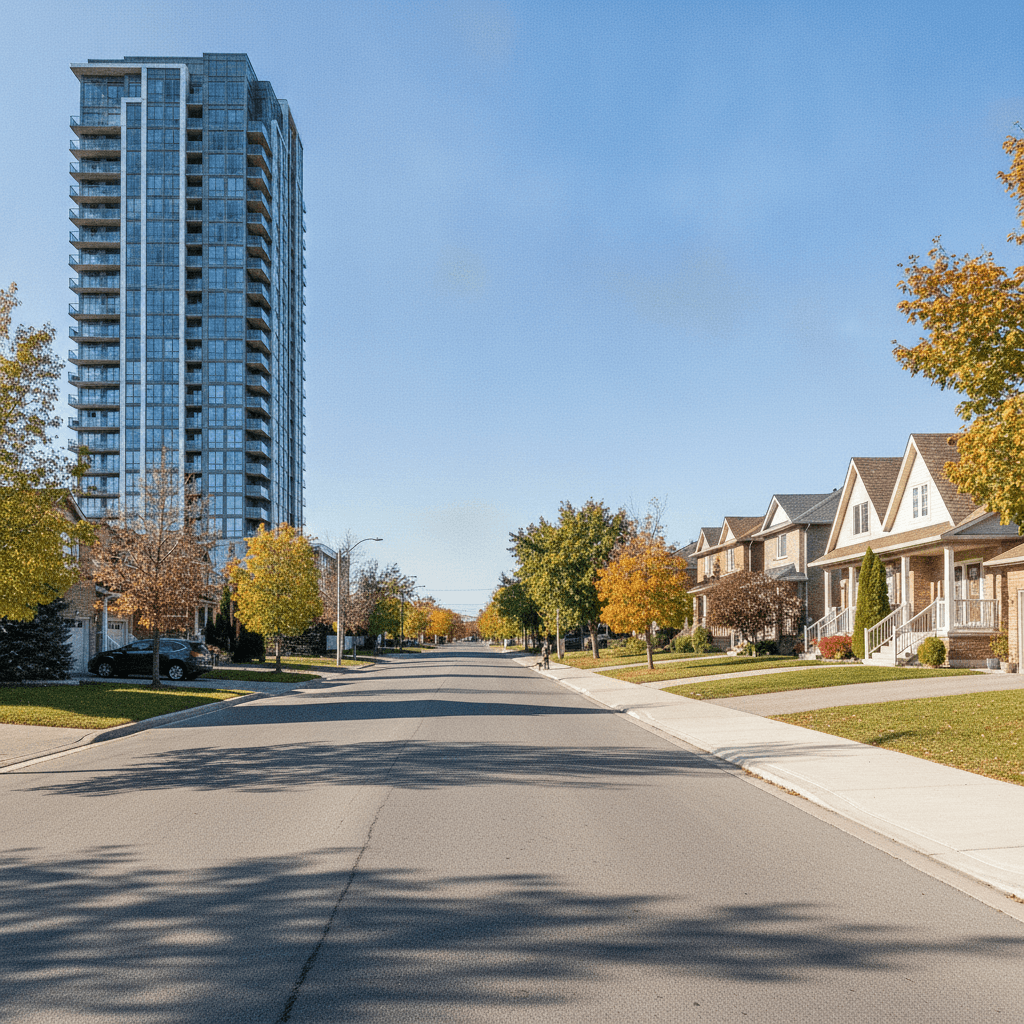
Choosing between a house and a condo is the process of matching property type to your lifestyle, budget, and upkeep preferences. In Brampton, compare space needs, monthly condo fees, freehold maintenance, amenities, commute, and resale patterns. Use a structured rubric so your choice fits both today’s needs and tomorrow’s plans.
By Maunil Shah — Realtor, HomeLife/Miracle Realty Ltd., Brokerage. Last updated: 2026-07-03
Summary
Houses offer space, privacy, and control over maintenance; condos trade space for convenience, amenities, and predictable fees. In Brampton, choose by ranking lifestyle priorities, total monthly obligation (mortgage, tax, condo fees), commute, and future plans. A quick scorecard and comparison table make the decision clear.
If you’re torn between a detached home and a condo apartment or townhouse, start by clarifying what you value most day to day. Then translate those values into a simple scoring system. You’ll turn a fuzzy “it depends” into a confident, data-backed decision you can act on.
- Define non-negotiables: bedrooms, parking, outdoor space, amenities, pet rules.
- Map total monthly obligation: mortgage, taxes, condo fees, typical utilities.
- Estimate maintenance time: lawn, snow, repairs vs. condo board-managed items.
- Consider lifestyle: commute, gym/pool access, elevator reliance, neighborhood vibe.
- Check resale factors: building health (reserves), freehold upkeep, and market cycles.
Before You Start (Prerequisites)
Get mortgage pre-approval, define must-haves and nice-to-haves, and set a realistic monthly ceiling. In Brampton, line up your property search, address-based valuation insights, and local building research before touring. These basics prevent decision drift and keep you focused.
Preparation reduces stress. It also prevents costly detours like bidding on the wrong property type or ignoring building health. In our experience working with Brampton buyers, the most decisive clients are the most prepared. Here’s what to line up.
Set your decision inputs
- Financing readiness: Secure a pre-approval so you know your ceiling and conditions.
- Monthly target: Define an upper limit that includes mortgage, taxes, condo fees, and typical utilities.
- Lifestyle map: Commute windows, school proximity, fitness, parks, and preferred neighborhoods.
- Home features: Bedrooms, bathrooms, work-from-home needs, storage, parking, elevator access.
Assemble your tools
- Property search: Use a location-first search to shortlist relevant houses and condos in Brampton.
- Address-based valuation: Pull quick price signals and recent comparables to ground expectations.
- VIP market reports: Track inventory shifts for condos vs. freeholds through the seasons.
- Building files (for condos): Review status certificates, reserve fund disclosures, and bylaws.
Why this matters
- Time-to-offer: When the right listing appears, you’ll act fast without second-guessing.
- Trade-off clarity: You’ll know exactly what you’re giving up (or gaining) with each property type.
- Negotiation posture: Data-backed expectations make your offer strategy stronger.

Step-by-Step Process: How to Choose Between Houses and Condos
Score lifestyle fit, total monthly obligation, maintenance, building health, and long-term flexibility. Compare 3–5 shortlisted homes and condos side-by-side. The highest total score that also meets your monthly ceiling usually indicates the best-fit property type.
Here’s a simple, repeatable process our Brampton buyers use to pick with confidence. It blends numbers with real-life preferences so you don’t choose a place you’ll outgrow in a year.
Step 1: Define success in one sentence
- Write your headline: “We want a quiet three-bedroom near parks with a 45-minute commute.”
- Anchor every decision to this sentence. If a property conflicts, it’s likely a no.
- Tip: Keep a printed version on your phone during tours to avoid impulse pivots.
Step 2: Build a 100-point scorecard
- Lifestyle fit (30): Bedrooms, storage, outdoor space, pet rules, elevator reliance.
- Monthly obligation (25): Mortgage + taxes + condo fees + typical utilities.
- Maintenance load (15): Time/effort for lawn, snow, roof, and repairs vs. condo coverage.
- Building/asset health (15): For condos, reserves and special assessment risk; for houses, age of roof, HVAC, windows.
- Flexibility (15): Ability to add bedrooms, finish a basement, or rent out in the future (check bylaws).
Step 3: Shortlist 3–5 properties across both types
- Use your Brampton location filters to pull a balanced sample of houses and condos.
- For condos, add building age, reserve fund status, amenities, and bylaw highlights.
- For freeholds, note lot size, parking count, recent big-ticket updates, and neighborhood upkeep.
Step 4: Calculate total monthly obligation for each
- Houses: Mortgage + property taxes + average utilities and routine upkeep.
- Condos: Mortgage + property taxes + condo fees (and any included utilities/services).
- Why this matters: Lenders consider recurring obligations; condo fees are factored into qualification alongside other debts.
Step 5: Check maintenance reality vs. lifestyle
- If weekends are for family or travel, a condo’s managed exterior may align better.
- If you enjoy projects and value privacy, a freehold’s autonomy is hard to beat.
- Ask: In a typical month, how many hours can you commit to upkeep?
Step 6: Validate building and asset health
- Condos: Review status certificate and reserve fund study for special assessment risk.
- Houses: Pre-offer inspection to gauge roof, foundation, plumbing, electrical, HVAC horizon.
- Signal: Strong reserves or recent capital updates reduce surprise expenses later.
Step 7: Pressure-test the next 3–5 years
- Plan changes: Remote work shifts, family size, potential need for a secondary unit.
- Mobility: Elevators vs. stairs, driveway snow vs. garage access, stroller and bike storage.
- Exit options: Rental rules, resale timelines, and how easy the property is to show.
Step 8: Pick the highest-scoring option under your ceiling
- Break ties by commute time, noise tolerance, or ability to renovate.
- If scores are close, do a second visit at a different time of day to test traffic and noise.
Comparison: Houses vs. Condos in Brampton
Houses excel in private space, parking, and renovation freedom. Condos win on convenience, amenities, and predictable exterior maintenance. Weigh these trade-offs against your monthly target and time budget; the right choice mirrors your daily habits, not just the list price.
Use this at-a-glance table to spot the pattern that fits you best. Then bring it to showings and update notes as you learn more about buildings and streets.
| Factor | House (Freehold) | Condo (Apt/Town) |
|---|---|---|
| Space & privacy | More bedrooms, yard, and separation from neighbors | Efficient layouts; shared walls and common areas |
| Monthly obligations | Mortgage + taxes + utilities + upkeep | Mortgage + taxes + condo fees (often includes some services) |
| Maintenance | Owner handles exterior and major systems | Corporation manages exteriors; interior is owner’s responsibility |
| Amenities | Varies; private yard and garage are typical perks | Gym, pool, concierge, guest suites (building-dependent) |
| Rules & flexibility | Fewer restrictions; check municipal bylaws | Bylaws govern pets, renovations, rentals, and usage |
| Renovation potential | High (finish basement, add deck, expand) | Moderate (interior updates; structural changes restricted) |
| Parking | Driveway/garage control | Assigned/owned spots; visitor parking rules apply |
| Building/asset health | Depends on age and prior maintenance | Reserve fund strength and capital plan are critical |
| Noise & access | Street/yard noise; direct entry | Shared hallways/elevators; security access |
| Resale considerations | Yard and parking attract families; condition matters | Amenities and fees influence demand; building reputation counts |
For insurance considerations, see this Ontario-focused comparison of condo vs. home policies from a regional brokerage: condo vs. home insurance differences. It’s a quick way to understand what the corporation’s master policy covers versus your interior unit contents and improvements.
Troubleshooting: When You’re Still Unsure
If scores are close, test-drive the lifestyle: tour at rush hour, check building bylaws, and simulate a monthly schedule with chores or elevator waits. Re-run your scorecard with new insights. The property that reduces friction most days usually wins.
- Problem: The condo fees feel uncertain.
Action: Read the reserve fund study and status certificate; ask about recent special assessments and planned capital projects. - Problem: The house’s maintenance looks daunting.
Action: Price out time, not dollars—who will mow, shovel, and coordinate trades? Consider seasonal service subscriptions. - Problem: Commute anxiety.
Action: Drive the route both ways at your actual start/finish times; note bus frequency and transfer points. - Problem: Noise or privacy worries.
Action: Visit at different times, stand in common areas, and ask about quiet hours in the bylaws. - Problem: Future flexibility.
Action: Confirm rental rules, pet policies, and renovation permissions before you make an offer.

Advanced Tips from a Brampton-Focused Realtor
Look beyond list price. Building reserves, bylaw restrictions, capital plans, and neighborhood upkeep can outweigh small price gaps. In Brampton, aligning your daily routine with property logistics (parking, elevators, snow) prevents buyer’s remorse.
- Scan reserves, not just amenities: A stylish lobby is great; a well-funded reserve is better for long-term stability.
- Elevator math: High floors with two elevators can add 5–10 minutes during peak times. Try it before you buy.
- Freehold upgrade path: Finishing a basement or adding storage can extend a home’s usefulness without moving.
- Rental flexibility: If potential future rental income matters, verify minimum lease terms and any owner-occupancy rules.
- Insurance nuance: A master condo policy typically covers common elements; owners cover interiors and contents—policy design differs from freehold homes.
Local considerations for Brampton
- Transit reality check: If you rely on buses, time your visit near Torbram Rd at Williams Pky to gauge frequency and transfers.
- Winter routine: For freeholds, test driveway access and snow storage. For condos, try the garage ramp after light snow.
- Errand efficiency: Walk from a target building to the Williams - Zum Bovaird Station Stop SB area during peak to feel foot traffic and wait times.
Financing and Fees: What Actually Changes the Monthly
Your monthly obligation differs by property type because condo fees are recurring and counted in mortgage qualification, while freeholds shift more costs to variable upkeep. Model both scenarios to stay under your ceiling with a comfort buffer.
- Condo fees: Fund building operations, utilities (varies), and capital reserves. They affect qualification ratios because they’re predictable obligations.
- Freehold upkeep: You control timing of roof, driveway, and exterior projects; monthly outlay varies, but you decide cadence.
- Utilities: Some condos include heat or water; many freeholds carry all utilities separately—compare like-for-like.
- Insurance: Policy structure differs by type; review coverage scope and deductibles for apples-to-apples risk management. A quick primer: condo vs. home insurance differences.
For buyers exploring new-build options, pre-construction condos have different deposit schedules and interim occupancy phases. A nearby overview of common steps can help you understand the flow before engaging a builder sales center: pre-construction condo guide.
Real-World Scenarios (From Brampton Buyers)
Match the purchase to how you actually live. Families often favor freeholds for space and parking; busy professionals lean to condos for convenience and amenities. Edge cases exist—use your scorecard and test days to pick your best-fit lane.
- Growing family: A three-bedroom freehold with a fenced yard scored highest for weekend play and storage. The ability to finish a basement sealed it.
- Two-commuter couple: A mid-rise condo near rapid bus service won on predictable commute, gym access, and zero exterior chores.
- Hybrid worker: A condo-townhouse with a private garage balanced office days and home-office quiet without elevator reliance.
- First-time buyer: A well-managed older condo with strong reserves beat a newer building with thin disclosures and rising fees risk.
Plan Your Next Step
Shortlist both property types, run the 100-point scorecard, and tour at realistic times. When you’re ready, get local files and compare side-by-side to move decisively on the best-fit option.
Want a second set of eyes? As a Brampton-focused Realtor backed by HomeLife/Miracle Realty Ltd., Brokerage, I’ll help you line up a balanced shortlist and review building health or freehold risks. Start with a location-based search, request VIP market snapshots, and pull an address-level value read to ground the decision.
Frequently Asked Questions
Most buyers compare lifestyle, monthly obligations, and maintenance to decide between a house and a condo. These quick answers address the common sticking points so you can pick with confidence.
How do I compare a condo’s monthly fee with a house’s variable upkeep?
List what the fee covers (heat, water, concierge, reserve contributions) and what you’d otherwise pay out-of-pocket in a freehold. Model a typical month and a “surprise month.” If both cases fit your comfort range, the condo’s predictability may suit you.
What documents should I review before buying a condo?
Review the status certificate, reserve fund study, bylaws, recent meeting minutes, insurance summary, and any notices about upcoming capital work. These reveal fee stability, special assessment risk, and rules that could affect pets, renovations, or rentals.
Is a condo or a house better for resale in Brampton?
Both resell well when aligned to local demand. Freeholds often attract space-seeking families, while amenity-rich condos appeal to commuters and first-time buyers. Building reputation, fee trends, and neighborhood upkeep are major drivers of interest.
How can I avoid buyer’s remorse after I choose?
Test the lifestyle before you commit. Tour at rush hour, load groceries from the garage or elevator, and time school or gym trips. Re-run your scorecard afterward. The choice that reduces daily friction usually stands the test of time.
Additional Resources
Use structured tools and reliable primers to deepen your comparison. Pair a location-first search with building or asset health checks, and read concise explainers on insurance and pre-construction nuances before touring.
- Primer on insurance differences for condos and houses: condo vs. home insurance differences.
- Overview of pre-construction condo steps near Brampton: pre-construction condo guide.
- Ontario-focused buying flow to understand timelines and conditions: buying a house in Ontario guide.
Conclusion
Decide between houses and condos by scoring lifestyle fit, monthly obligations, maintenance tolerance, and future flexibility. Shortlist both types, validate building or asset health, and choose the top scorer under your ceiling. That’s how you move fast—and confidently.
- Key Takeaways
- Translate your values into a 100-point scorecard for apples-to-apples comparisons.
- Model the true monthly obligation, not just mortgage and tax.
- Test-drive commute, elevators, and chores before you write an offer.
- Healthy reserves and clear bylaws (for condos) or recent updates (for houses) reduce risk.
Ready to see how this plays out with live listings? Shortlist both property types and schedule tours this week. I’ll help you read the signals, compare side-by-side, and act decisively when the right home appears.