
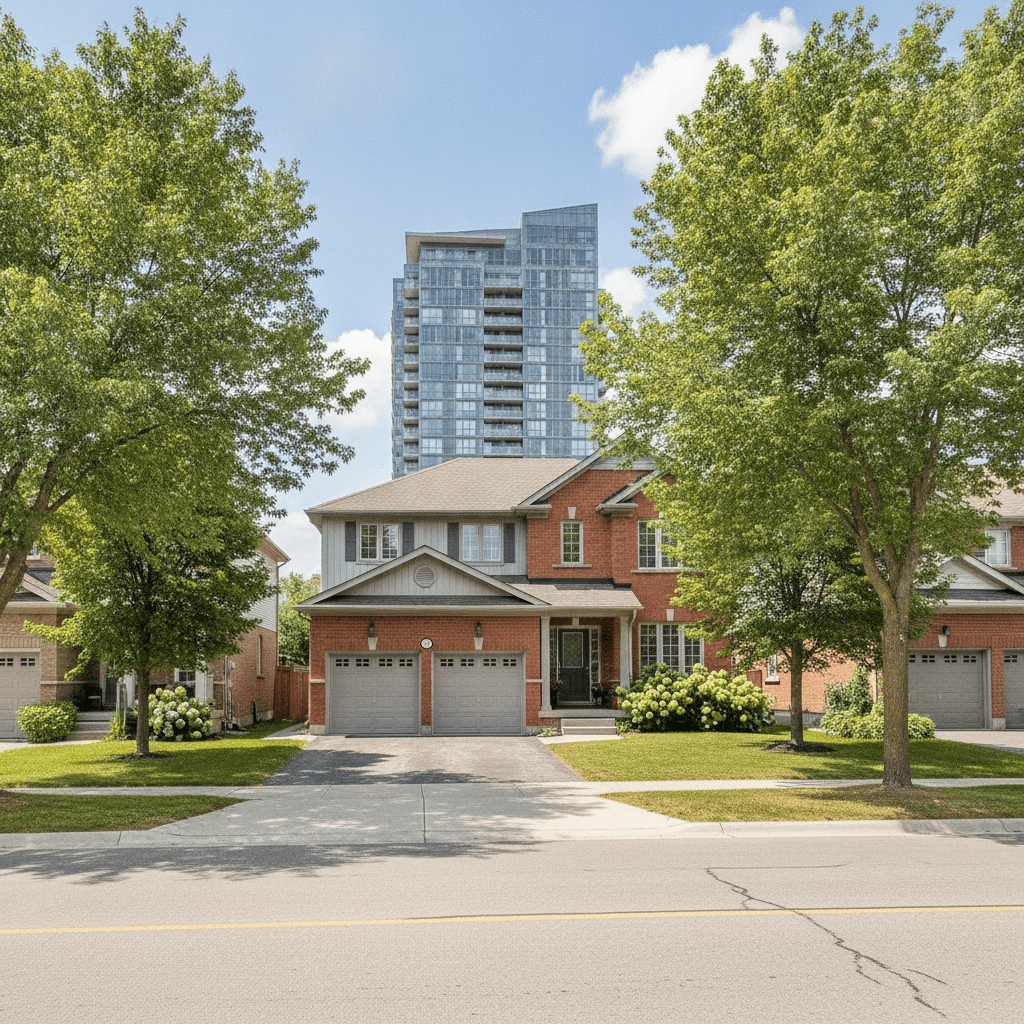
Comparing houses and condos is the structured process of weighing ownership type, maintenance, space, community rules, and long-term value to pick the right home. From our Brampton office at 470 Chrysler Dr #20, we guide you on how to compare houses and condos with a clear scorecard so your decision is confident, not rushed.
By Maunil Shah, Realtor — HomeLife/Miracle Realty Ltd., Brokerage
Last updated: 2026-06-18
Introduction
To compare houses and condos well, define lifestyle needs, understand maintenance obligations, and evaluate building rules before you tour. This turns an emotional choice into a practical one and keeps your shortlist focused on homes that fit how you actually live.
You’re not just buying square footage. You’re choosing daily rhythms: yard work or elevators, private driveways or shared garages, bylaws or freedom. In our experience helping Brampton buyers, the best decisions come from a simple framework applied consistently to real listings—not from falling in love at the first showing.
In the next sections, we’ll align your goals, set up a targeted property search, and walk through a step-by-step comparison method. We’ll also flag documents to review, common pitfalls, and a few advanced tips that protect long-term value.
Summary: Houses vs. Condos at a Glance
In Brampton and across the Regional Municipality of Peel, houses trade monthly fees for control and yard space, while condos trade some control for convenience, amenities, and managed upkeep. If privacy and freedom lead, lean house; if simplicity and building services lead, condos often win.
Think of it as control versus convenience. A freehold house usually gives you the land, the structure, and the right to improve as you wish (within municipal rules). A condo gives you your unit and shared ownership of common elements, with a board managing upkeep. This core difference drives how you’ll spend time, handle repairs, and plan improvements.
| Factor | House (Freehold) | Condo (Apartment/Town) |
|---|---|---|
| Ownership | Land + structure | Unit + share of common elements |
| Maintenance | Owner handles exterior/interior | Corporation handles common areas; you manage your unit |
| Monthly Fees | None for most freeholds | Condo/HOA fees typically apply |
| Rules | Municipal bylaws and basic covenants | Condo bylaws, rules, and declaration |
| Space/Outdoor | More interior + private yard | Compact; balcony/terrace common |
| Amenities | Private or minimal | Gym, concierge, party room, visitor parking (varies) |
| Insurance Scope | Full dwelling coverage | Interior unit policy; corporation covers common elements |
| Noise/Privacy | Higher privacy; no shared walls (detached) | Shared walls/elevators; noise mitigation varies |
| Security | Owner-provided (locks, cameras) | Controlled access, concierge, cameras (varies) |
| Resale Dynamics | Lot size, street, schools | Building health, reputation, fees trend |
Notice how each row links back to lifestyle. If you want a garden, hobbies in a garage, or a big dog, a house likely serves you better. If you prize low-effort living, a secure lobby, and in-house amenities, a condo often fits. Hold that lens as we get tactical.

Before You Start (Prerequisites)
Get pre-approved, define non-negotiables, and set a neighborhood-focused search before touring. This prep keeps the house-versus-condo decision objective, speeds up showings, and prevents compromise on what truly matters.
Preparation beats endless browsing. Ground your search with a few practical moves so you compare options on equal footing.
- Financing clarity: Secure a pre-approval and a comfort range. You’ll move faster on the right property.
- Lifestyle audit: Yard work appetite, pet needs, elevator tolerance, and work-from-home realities are core drivers—not afterthoughts.
- Commute + transit: Map target travel times and the level of walkability you want near groceries, parks, and transit.
- Rules comfort: Decide how you feel about condo bylaws versus freehold freedom (e.g., décor changes, rental flexibility).
- Maintenance expectations: Be honest about DIY capacity versus a preference for managed services.
- Search setup: Use a location-first property search and save alerts for both houses and condos in your target zone.
On our site, buyers often begin with a simple, location-based property search and then run an address through the “What’s My Home Worth?” tool to benchmark value patterns in surrounding streets. That two-step view anchors expectations before the first tour.
Local considerations for Brampton
- Proximity to transit matters: test timing near “Torbram Rd at Williams Pky” if you rely on buses for work or school.
- Winter routines: houses require snow clearing and salting, while condos centralize it—handy during lake-effect snow days.
- Reality check: weekday visits near “Williams - Zum Bovaird Station Stop SB” reveal authentic rush-hour patterns you won’t see on weekends.
Step-by-Step Process: How to Compare Houses and Condos
Score each property on lifestyle fit, ownership obligations, building/street health, and exit potential. Shortlist the top two options and pressure-test them with a second visit, targeted questions, and document review.
This process works because it balances heart and head. It captures what you feel during a tour but reins it in with structured checks you complete afterward.
Step 1 — Define must-haves and nice-to-haves
Write 6–8 must-haves before you tour: bedrooms/bathrooms, parking type, private outdoor space, elevator comfort, office or flex room, natural light, storage, and pet needs. Then add 6–8 nice-to-haves like a gym, concierge, or a south-facing balcony.
Step 2 — Build a smart short list
Save 4–6 houses and 4–6 condos that hit at least 80% of your must-haves. Favor stable streets for houses and well-run buildings for condos. Note how each option supports your weekday routine and weekend plans.
Step 3 — Evaluate ownership obligations
With a freehold house, you manage the roof, exterior, yard, and snow—plus long-term upkeep planning. With a condo, you manage the interior of your unit while the corporation maintains common elements like the roof, hallways, and garage. The practical question is: which set of obligations matches your time and skills?

Step 4 — Review rules and critical documents
For condos, request the declaration, bylaws, rules, recent financials, and the status certificate. Confirm pet policies, renovation permissions, short-term rental rules, and any current or pending special assessments. For houses, check municipal zoning, lot setbacks, easements, and any registered restrictions before you plan additions or suites.
Step 5 — Test daily life at different times
Visit at both peak and quiet times. Try the elevators, laundry rooms, garbage rooms, and parking workflow for condos; for houses, pay attention to street parking, snow storage spots, and nighttime lighting. Time the commute to work and school from each option on a weekday.
Step 6 — Assess building or street health
For condos, review the reserve fund study and recent capital projects (e.g., roof, elevators, garage membranes). Note fee trends and hallway condition. For houses, evaluate roof age, windows, foundation, grading, and drainage. Healthy buildings and streets are felt as much as seen—pay attention to recurring repair notes in listings and to how neighbors maintain their properties.
Step 7 — Compare exit potential
Resale dynamics differ. Houses rely on lot size, school catchments, and the street’s reputation. Condos hinge on building reputation, amenity quality, and fee trends. A second tour focused on small details—storage, balcony usability, noise—often clarifies which home will be easier to love now and to sell later.
Free, 10‑minute comparison consult
Unsure which way to lean? Book a quick call and we’ll set up your custom scorecard, a neighborhood search, and two side-by-side tours. Direct line: 647-686-3069.
Troubleshooting: When the Choice Isn’t Clear
If you’re stuck, cap the list to two houses and two condos, isolate your top three deal-breakers, and tour again with a checklist. Switching neighborhoods or trying a condo townhouse hybrid can also unlock clarity.
Decision gridlock usually comes from fuzzy priorities or comparing apples to oranges (e.g., a dated freehold far from transit versus a new condo on a prime corridor). Tighten the frame and retest.
- Too many options: Limit to four finalists and re-score on lifestyle fit first, obligations second, exit potential third.
- Conflicting needs: Consider stacked or town-condo forms that blend space with managed upkeep while keeping some outdoor access.
- Document overload: Ask your agent for a plain-English summary of the condo status certificate and the last reserve fund study.
- Emotional bias: Revisit finalists at a different time of day; bring the same checklist to keep comparisons fair.
Ownership Costs and Value Factors (No Pricing)
Think in categories, not numbers: recurring obligations, reserve funding, maintenance scope, insurance coverage, utilities, and future capital projects. Lining these up side by side prevents surprise commitments after move-in.
Two owners can pay similar monthly amounts but feel radically different about value because time and stress are valued differently. Use these categories to compare like-for-like without chasing line-item prices.
- Recurring obligations: Utilities and insurance apply to both; condos add monthly fees that fund operations and reserves.
- Future projects: Houses plan for roof/HVAC/windows; condos plan for elevators, garage membranes, and façade work.
- Insurance scope: Houses insure the full dwelling; condo owners insure the interior unit while the corporation covers common elements. For a plain-English overview, review this guide to condo vs home insurance.
- Time value: Estimate DIY hours you’d spend on a house versus the managed services you’d prefer in a condo—then decide which trade makes you happier.
As you compare, capture notes immediately after tours. Your impressions fade quickly, and small details (like cumbersome garbage rooms or a shaded yard) often determine long-term satisfaction.
Advanced Tips (For a Confident Decision)
Use a weighted scorecard, dig into the condo’s reserve fund study, and benchmark neighborhood turnover. A small diligence burst now protects years of daily enjoyment and supports resale confidence later.
Turn subjective feelings into a repeatable system. Here’s how we pressure-test finalists for clients in Brampton:
- Weighted scoring: Give lifestyle fit the highest weight, then obligations, then exit potential. Amenities come last unless you’ll use them weekly.
- Photo evidence: Take the same 8–10 photos in every finalist—entry, kitchen, bath, bedrooms, storage, balcony/yard, view, parking. Compare them side by side.
- Pre-construction lens: If you’re considering new builds, preview the pre-construction buying process so you know what documents and timelines to expect.
- Layout realism: Balcony size and storage usability matter. Skim a real-world two-bedroom condo example to visualize proportions, like this example two-bedroom listing.
- Neighborhood turnover: Stable streets near parks/schools can support steady demand, which helps when it’s time to sell.
When we accompany clients to second tours, we bring a measuring tape and a simple checklist. The home that felt “cozy” at first pass can reveal real constraints when you test furniture footprints and storage paths.
Frequently Asked Questions
These quick answers address the most common house-versus-condo questions buyers ask in Brampton. Use them as a checklist before your next tour.
What documents should I review for a condo?
Start with the declaration, bylaws, rules, financial statements, and the status certificate. Confirm pet policies, renovation permissions, rental rules, and any current or planned special assessments.
Are condos or houses better for first-time buyers?
Neither wins by default. Condos simplify upkeep and often offer security and amenities. Houses provide privacy, outdoor space, and freedom to personalize. Choose the option that best fits your daily routine and maintenance appetite.
How do monthly condo fees impact value?
Fees fund operations, insurance, and the reserve for future repairs. Predictable fees paired with a healthy reserve fund can support building stability, comfort, and buyer confidence over time.
Can I rent out my condo unit?
It depends on the declaration and bylaws. Some buildings restrict short-term rentals or set minimum lease lengths. If renting is important to you, verify the rules before you buy.
Additional Resources
Move from research to action: set up a neighborhood search, run an address-based value check, download VIP reports, and schedule a quick consult to plan next steps.
On our platform, buyers can:
- Start a targeted property search by preferred neighborhood and property type.
- Run an instant address-based home valuation to gauge nearby trends.
- Download VIP buyer and seller reports for practical checklists and timelines.
- Set up alerts so new matches hit your inbox the moment they appear.
If you prefer hands-on help, we’ll curate two contenders and walk you through documents in plain English. That clarity turns hesitation into momentum.
Key Takeaways
Score lifestyle fit first, obligations second, and exit potential third. Validate with documents and a second tour. When in doubt, simplify the face-off to two finalists and decide with confidence.
- Houses emphasize control, privacy, and outdoor space; condos emphasize convenience, security, and amenities.
- Documents and fee trends tell a condo’s real story—read them carefully before you commit.
- Neighborhood and building reputation drive long-term comfort and resale potential.
- A simple scorecard plus a second tour removes guesswork from a major life decision.
Conclusion
Your best match appears when you compare lifestyle, obligations, and exit potential against real listings. With a structured process and local guidance, the right choice becomes obvious—and durable.
When we work with Brampton buyers, we turn a stressful either/or into a confident yes. If you’re ready, we’ll set your scorecard, dial in neighborhoods across Peel, and tour the two best contenders side by side. Then you’ll choose based on evidence—not pressure.