

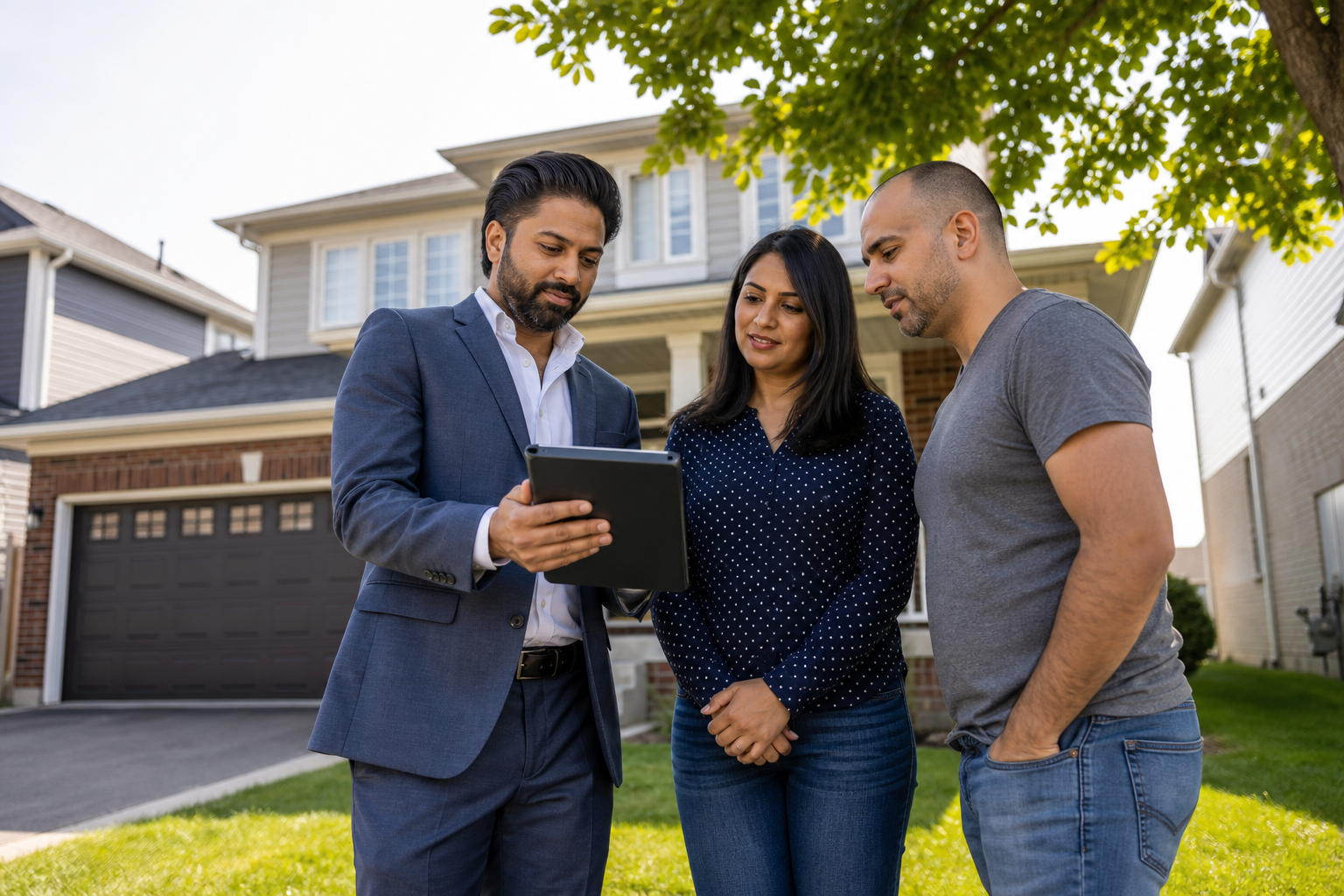
How to price a home in Brampton: key factors that change the quote
Brampton market snapshot you should know first
Before you set a list price, understand the local context. Recent Brampton market summaries show an April 2026 detached average sold price of $1,018,564 and highlight freehold townhouses as highly competitive in the $700,000 to $850,000 band, with many townhouses selling near 99% of list price. These benchmark ranges vary by neighbourhood, so a city-level number is only a starting point when you compare your home to local sales (House for Sale in Brampton, Brampton neighbourhood guide).
Use these ranges to set expectations, then narrow to your micro-market. School zones, transit access, and local amenities can move a price up or down within the broader benchmark bands.
Three practical methods to price your Brampton home
Combine three valuation methods and compare their outputs before choosing a list price. Each method brings different strengths and limits, and together they create a defensible number you can justify to buyers and your agent.
1. Comparable sales (comps): direct market evidence
Comparable sales are the most direct indicator of what buyers have actually paid nearby. To use comps correctly:
- Choose three to five recently sold homes that match your property type, size, lot and key features.
- Prefer sales within 60 to 120 days in the same neighbourhood to reflect current demand.
- Record sold price, list price, days on market and any seller concessions, and adjust for material differences such as finished basements or major renovations.
Be careful not to compare a renovated home to an unrenovated one without an explicit value adjustment. For a local primer on using nearby sales to estimate value, see a Brampton explanation of property worth (A Simple Guide to Knowing Your Property's Worth).
2. Professional CMA from a Brampton agent: context and judgement
A Comparative Market Analysis from a local agent combines comps with market judgement. A thorough CMA should include recent sold listings, active and pending listings, expired listings, a recommended list price range, and the specific adjustments the agent used.
Ask the agent to show why they adjusted particular comps and how buyer demand for your property type is trending. Local experts note that getting the price right from day one usually shortens marketing time and avoids the negative effects of later price reductions (How to price your home to sell in the current Brampton market).
If you want a quick address-based valuation and neighbourhood reports before meeting, Maunil Shah’s site offers an address-driven "What’s My Home Worth?" tool and free VIP reports to prepare for a CMA (Maunil.YourRealtor tools).
3. Address-based online estimates: fast cross-checks, not the final answer
Automated valuation models deliver a quick estimate using public records and recent sales. They are useful as a cross-check but often miss interior upgrades, lot subtleties and recent local demand shifts. Use online estimates to confirm or question your comp and CMA results, and investigate any large discrepancies rather than relying on the automated number by itself (estimate guidance).
Comparable sales: how to pick the right examples
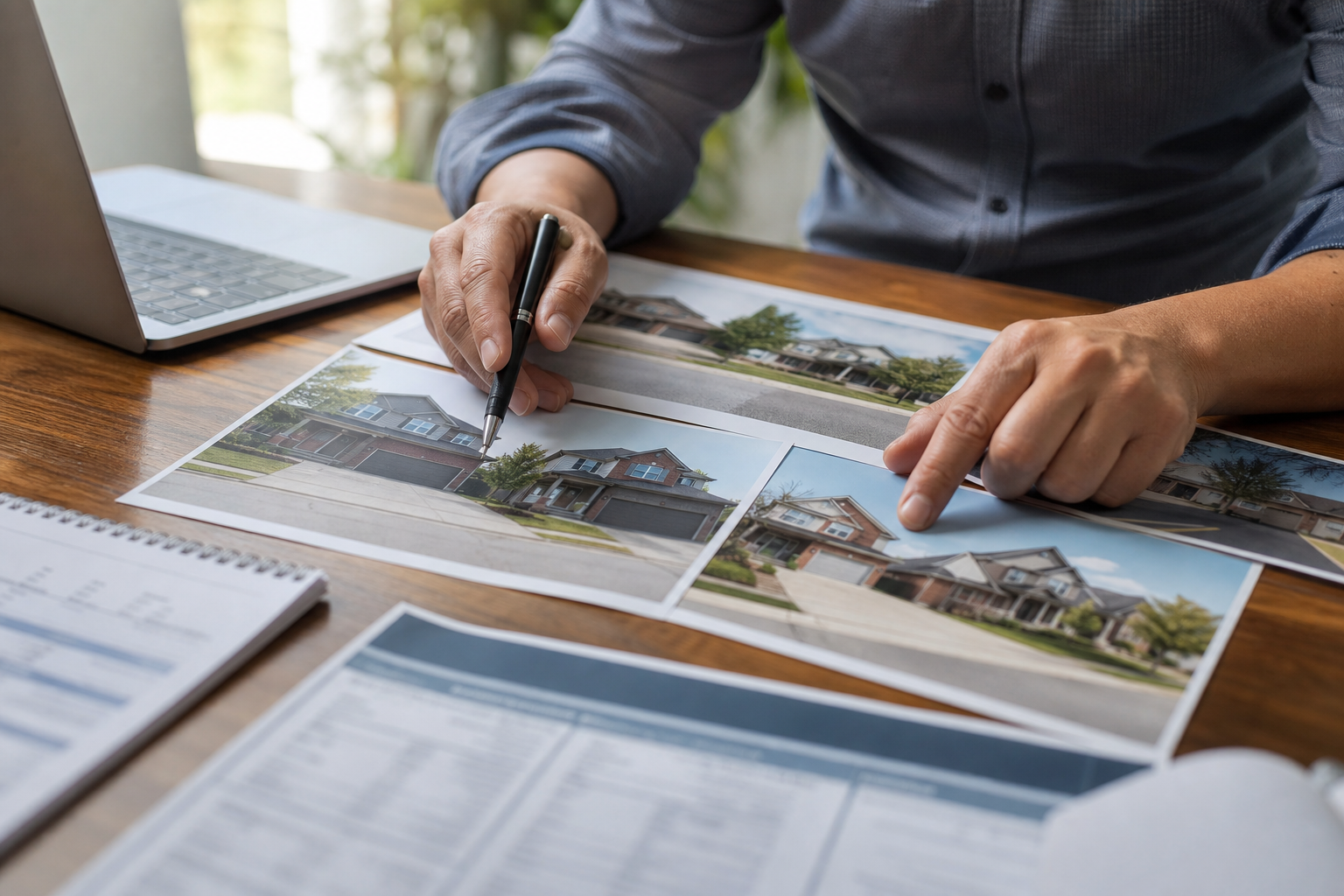
Not all comps are equal. Choose sales that match your property on three dimensions: type, location and condition. Filter by property type first, then by street or neighbourhood, and finally by lot size, age and interior condition.
- Avoid sales that included large seller incentives or atypical terms unless you can account for them.
- Prefer closed sales over conditional or expired listings for reliable price evidence.
- When in doubt, ask your agent for the adjustment amounts and the rationale so the final suggested price is transparent.
How neighbourhood and property type change list price in Brampton
Neighbourhood and property type drive the largest price differences. For 2026, detached homes roughly range from $980,000 to $1,150,000 depending on neighbourhood, while townhouses typically trade in the $700,000 to $850,000 band. Those bands reflect supply, recent sales and buyer preferences for schools, transit and amenities (Brampton Neighbourhood Guide 2026).
Market messaging should match the buyer set for your property type. A detached home is compared with detached comps, not condos, and marketing should highlight the attributes buyers of that type value most.
Common pricing mistakes and the local consequences
Here are frequent errors sellers make and why they backfire in Brampton.
- Overpricing based on hope. Consequence: fewer showings, weaker offers, and likely price cuts that erode perceived value and momentum.
- Ignoring recent comps. Consequence: a price gap between buyer expectations and your list price that increases days on market.
- Using outdated or non-local data. Consequence: micro-markets in Brampton can behave differently from the wider region; non-local data produces errors.
- Not accounting for condition. Consequence: offers will reflect the buyer's expected repair or upgrade costs and will be lower unless you disclose work done.
A data checklist and decision criteria for setting your list price

Collect these items before you finalise a price. They make your asking number defensible and make it easier for the agent to prepare a solid CMA.
- Three to five recent sold comparables within 60 to 120 days in the same neighbourhood.
- Current active and pending listings to understand your immediate competition.
- Sold price versus list price ratios and average days on market for your property type from local market summaries.
- Receipts and descriptions for major upgrades such as roof, HVAC or renovations.
- Property assessment and current property tax details to estimate net proceeds.
- One or two target scenarios: a firm asking price for a quick sale and a range if you want negotiating flexibility.
Use published local market summaries to test your range before listing (House for Sale in Brampton).
What to ask your Brampton agent at valuation
Bring these questions to a valuation meeting and expect specific, evidence-based answers.
- Which comparable sales did you use and why? Expect to see at least three to five comps with adjustment notes.
- What is the recommended list price and a realistic selling range? Expect a clear numeric range and rationale.
- How many similar homes sell here each month and what is the average days on market? Expect local market metrics.
- What marketing plan will you use and how does price affect that plan? Expect online exposure, open houses and targeted outreach details.
- What repairs or staging would increase net proceeds versus the cost? Expect a cost to benefit estimate.
- What is your plan for price adjustments if the property underperforms? Expect a timeline and decision triggers, for example a two to three week review.
- Can you provide a net proceeds estimate at the suggested price? Expect a basic calculation including closing costs and outstanding balances where applicable.
Many agents provide an initial CMA at no charge as part of a listing discussion. If you want data ahead of your meeting, run an address valuation and request VIP reports on the agent site to prepare (the official website).
Next steps: how to use Maunil's tools and request a Brampton valuation
Three practical next steps for a defensible list price:
- Run an address-based valuation on the official website to get a quick estimate and download a free VIP neighbourhood report.
- Compile three local comps and detailed notes on your home's condition and upgrades.
- Call or book a valuation meeting to get a professional CMA and a recommended list price based on current Brampton market conditions. You can reach the office at 647-686-3069 or request a consultation through the site.
Local fees and property tax resources to check before listing
Before you finalise net proceeds, check municipal property tax and assessment information. Brampton’s property tax FAQs answer common assessment questions, and regional MLS price indices can help benchmark market movements (Brampton property tax FAQs, TRREB MLS HPI public tables).
Frequently asked questions
Will an online address valuation be accurate for my Brampton home
Online valuations are a fast cross-check but can miss interior upgrades, recent renovations and local demand shifts. Use them alongside recent comps and a professional CMA for a reliable listing price (estimate guidance).
How much does my neighbourhood affect the list price
Neighbourhood is a primary price driver. 2026 benchmarks show detached home ranges roughly from $980,000 to $1,150,000 and townhouses commonly in the $700,000 to $850,000 band, so location is a key determinant of final list price (Brampton neighbourhood guide).
What happens if I price above recent comparable sales
Pricing too high typically reduces showings and leads to longer days on market, followed by price reductions that weaken negotiating leverage. Local advisers emphasise pricing correctly on day one to retain buyer momentum (local pricing advice).
Do Brampton agents usually provide a CMA for free
Many agents offer a preliminary CMA at no charge during a listing discussion. A more detailed, bespoke valuation is commonly provided for sellers who are actively preparing to list. To get started, run an address valuation and request VIP reports online (the official website).
When should I consider a price adjustment after listing
Consider an adjustment if you receive no meaningful showings or offers after a period longer than the local average days on market, or if comparable sales shift materially. Your agent should set review timing and specific performance triggers at listing, for example a two to three week review with measurable metrics.