
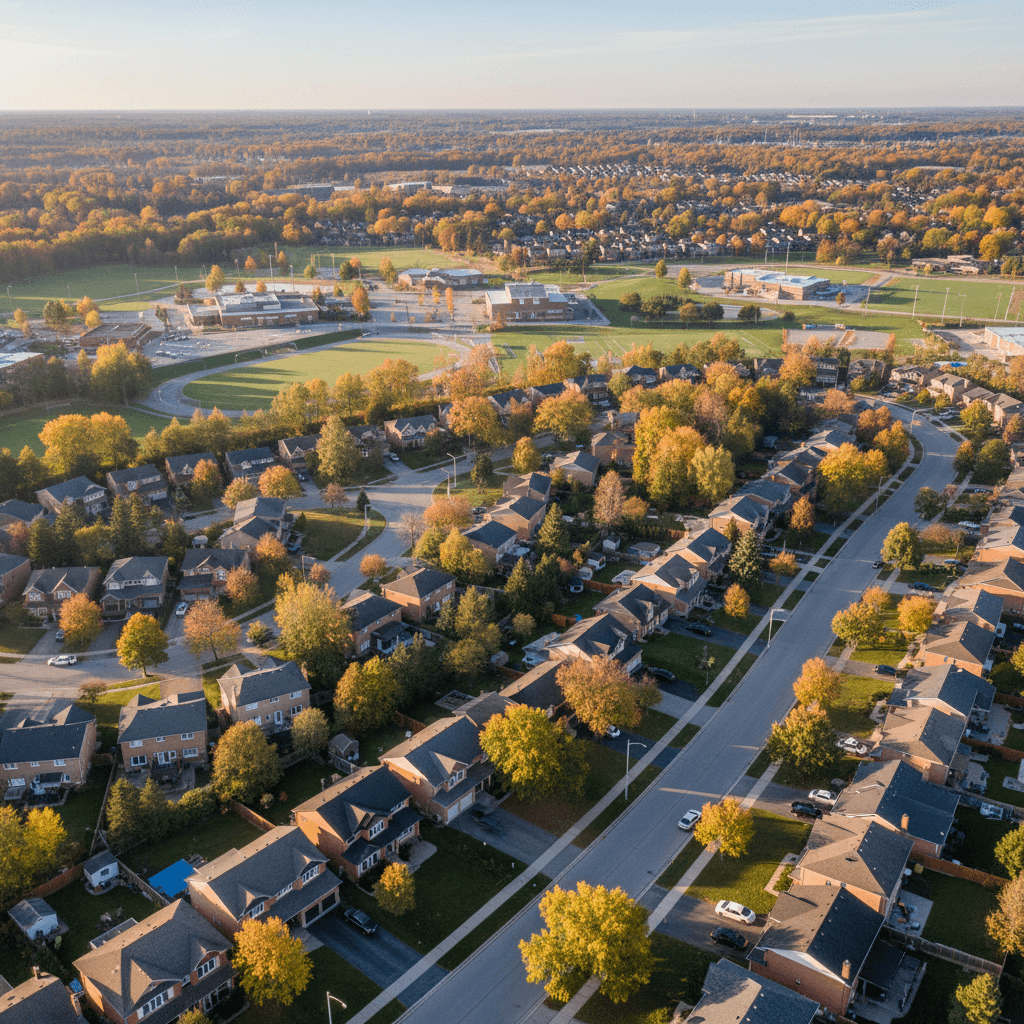
A Peel Region home valuation guide is a step-by-step framework homeowners use to estimate market value using comparable sales, local trends, and property specifics. It helps Brampton sellers and buyers decide next steps confidently. At 470 Chrysler Dr #20 in Brampton, our address-based tool and CMA process deliver fast, local insight you can use now.
By Maunil Shah, Realtor — HomeLife/Miracle Realty Ltd., Brokerage
Last updated: 2026-05-13

At a Glance
This guide shows how to value a home in Peel Region using CMAs, AVMs, appraisals, and assessments. You’ll learn what drives price in Brampton, how to run comps, and when to call a professional. Use it to plan listing timing, upgrades, and offer strategy with confidence.
Use this complete guide to move from “What’s my home worth?” to a well-supported estimate you can act on. We wrote it for Brampton sellers, buyers, and investors who want a practical, local playbook.
- Understand the four main valuation methods and when to use each
- See which features in Brampton homes actually move price
- Follow a simple, repeatable process to build a credible estimate
- Get pro tips from a local REALTOR working daily across Peel Region
- Decide next steps: list, hold, upgrade, or refinance
Local considerations for Brampton
- Transit access near Williams – Zum Bovaird Station Stop SB often boosts buyer interest for commute-focused shoppers.
- Winter listings see fewer showings; strong photos and flexible showing windows help maintain momentum December–February.
- Homes east of Torbram Rd at Williams Pky with finished basements and two-car parking trend well in family buyer segments.
What Is Home Valuation in Peel Region?
Home valuation in Peel Region is the process of estimating a property’s current market value using local comparable sales, condition, and neighborhood demand. In Brampton, we triangulate a Realtor CMA, an automated estimate, and if needed an appraisal to anchor decisions for listing, buying, or refinancing.
Valuation isn’t a single number. It’s a range supported by evidence. In our experience, a well-built range narrows quickly once real buyer feedback arrives through showings and offers.
- Market value: Most probable price a ready, willing, and able buyer would pay in a reasonable marketing period.
- List price: A strategic number chosen for marketing; it should reference, not replace, market value.
- True north: Your home’s value is local. Street-level differences in Brampton (lot width, parking, school zone) regularly swing results.
On a typical Brampton detached, a 5–10% swing can reflect condition gaps, basement quality, and parking. That’s why we stack multiple methods and ground them with hyperlocal comps.
Why Accurate Valuation Matters
Accurate valuation protects equity, speeds time on market, and strengthens negotiations. Sellers avoid overpricing and stale listings. Buyers limit overbids and appraisal gaps. Both sides use a data-backed number to time moves, plan upgrades, and write firmer offers with less uncertainty.
Here’s why it’s pivotal in Brampton and across the Regional Municipality of Peel:
- Pricing power: Listings aligned with comps attract more day-one showings and better-quality offers.
- Negotiation clarity: A tight comp set helps you counter with facts, not feelings.
- Appraisal alignment: Offers supported by data reduce risk of low appraisals and last-minute renegotiations.
- Investment planning: Clear value guides whether to finish a basement or refresh paint before listing.
- Timeline control: Right-priced homes typically move through offer cycles faster, improving certainty.
Homeowners often ask, “Should I wait for spring?” Seasonality matters, but the bigger lever is fitting your property cleanly into the most comparable, high-demand inventory at any time of year.
Peel Region Home Valuation Guide: What You Need to Know
Use CMAs for street-level accuracy, AVMs for quick directional numbers, appraisals for lender-grade certainty, and tax assessments for background only. Combine methods, then adjust for Brampton specifics like finished basements, parking, and transit access to get a decision-ready estimate.
We tailor this Peel Region home valuation guide to how buyers actually shop in Brampton, Mississauga, and nearby cities. It’s grounded in the same steps we use in our daily Realtor workflow.
- Collect facts: Beds/baths, interior square footage, lot size, parking, basement type, age, upgrades, roof/HVAC windows.
- Pull comps: 3–7 sold comparables within 0.5–1.5 km, matched by style, size, and condition, plus 2–3 active and pending.
- Normalize: Adjust for features (garage count, finished basement, lot width), then convert to a per-square-foot view.
- Triangulate: Cross-check with an automated valuation model and, when needed, a full appraisal.
- Stress test: Consider best-, base-, and conservative-case scenarios; plan strategy accordingly.
Result: a supported range you can use to pick a list strategy or write a competitive offer with confidence.
How Each Valuation Method Works
CMAs use real, nearby sales to mirror buyer logic; AVMs analyze large datasets for instant estimates; appraisals provide lender-grade opinions; tax assessments are administrative baselines. In Brampton, we rely on CMAs first, then use AVMs and appraisals to validate the range.
These four methods each have a role. Here’s a side-by-side view:
| Method | What it is | Best use in Peel | Typical turnaround | Key limitation |
|---|---|---|---|---|
| Comparative Market Analysis (CMA) | Realtor-built comp set using nearby solds, actives, and pendings | Pricing a listing or validating an offer | Same day to 48 hours | Quality depends on comp selection and adjustments |
| Automated Valuation Model (AVM) | Algorithmic estimate from public and listing data | Quick directional value before deeper analysis | Instant | Can misread renovations or unique features |
| Appraisal | Licensed appraiser’s opinion of value | Financing, complex properties, legal needs | 2–7 business days | Snapshot in time; may lag fast market changes |
| Municipal/Tax Assessment | Administrative assessed value for taxation | Background context only | Not applicable | Not meant to reflect live market value |
- Pro tip: In our Brampton files, CMAs anchored to 3–5 recent solds within 1 km produce the most dependable ranges.
- Where AVMs shine: Townhouses and condos with multiple recent sales in the same complex see tighter AVM spreads.
- When to appraise: Unique lots, legal basements, or estate matters benefit from appraisal-grade documentation.
Features That Move Price in Brampton
In Brampton, finished basements, parking capacity, lot width, recent systems updates, and proximity to key transit stops consistently influence value. Homes near Williams – Zum Bovaird Station Stop SB and Torbram Rd at Williams Pky often see stronger showing activity from commuters.
Buyers sort fast. Here are the usual levers in our local showings and offer reviews:
- Basements: A well-finished basement with a bathroom can materially widen your buyer pool.
- Parking: Two-car parking (garage + driveway) eases daily life; it’s a high-frequency filter.
- Lot and layout: Wider lots and functional main-floor layouts photograph and show better.
- Mechanical updates: Newer roof, HVAC, and windows reduce buyer risk and inspection friction.
- Kitchens/baths: Neutral, move-in-ready finishes help listing photos pop and drive first-week traffic.
- Micro-location: Walkability to transit and parks is a recurring request in buyer briefs.
If you’re debating where to invest effort pre-list, prioritize safety fixes first, then paint, lighting, and minor carpentry that improve photos and first impressions.
Step-by-Step: Build Your Home Value Estimate
Document your home facts, pull 3–7 nearby solds, normalize differences, and cross-check with an automated estimate. If results diverge widely, request a professional CMA or appraisal. This repeatable workflow turns guesswork into a defendable price range.
- Document the property
- Square footage by level, bed/bath count, lot size and width
- Parking type and capacity; basement type and finish level
- Update timeline: roof, furnace/AC, windows, kitchen, baths, flooring
- Pull nearby solds
- 0.5–1.5 km radius, same style, similar size and age
- Prefer sales within the last 90–180 days for recency
- Add 2–3 active/pending to gauge current competition
- Normalize differences
- Adjust for finished basement, parking count, and lot width
- Convert to price-per-square-foot to compare apples-to-apples
- Create best/base/conservative scenarios
- Cross-check and refine
- Run an AVM for a quick sense check
- If the spread is large or the home is unique, request a full appraisal
- Finalize a target list strategy relative to your supported range
Want help? Our address-driven “What’s My Home Worth?” workflow lives at 470 Chrysler Dr #20 in Brampton — we build these every day and can turn one around quickly.

Best Practices and Common Mistakes
Anchor value to the three tightest comparable sales, not the highest. Photograph-ready condition beats quick fixes. Avoid reading tax assessments as market value. In Brampton, honest condition notes and precise comp selection create reliable results and fewer surprises later.
Best practices
- Pick the right twins: Choose comps that match style, size, and micro-location first; don’t chase far-away high sales.
- Update list: Track updates by date and scope so you can defend adjustments during negotiation and appraisal.
- Photograph well: Great photos and floor plans tighten buyer expectations and reduce lowball risk.
- Pre-list walkthrough: Fix safety and maintenance items that inspection will flag; it protects value later.
- Scenario plan: Prepare a base case and two alternates — it makes real-time offer decisions easier.
Common mistakes
- Cherry-picking the single highest sale while ignoring better-matched comps.
- Overweighting tax assessments or automated estimates without on-the-ground context.
- Skipping condition adjustments; buyers discount deferred maintenance quickly.
- Underestimating the role of parking, basement finish, and lot width in Brampton valuations.
Tools and Resources You Can Use
Start with a Realtor-built CMA, then sense-check with an AVM and, when needed, a lender-grade appraisal. Complement your analysis with educational explainers and local market insights to understand trends that comps alone can’t show.
- Our CMA workflow: We build 3–7-comp packages with adjustment notes and maps so you see the logic clearly.
- AVM cross-check: Instant, directional; treat it as a starting point.
- Appraisal coordination: For unique properties or financing milestones, we can help coordinate timing and paperwork.
Real Peel Region Examples (Sanitized)
Local case studies show how specific features move value. In Brampton, finished basements, parking, and micro-location around transit are repeat drivers. These brief scenarios mirror patterns we see weekly across detached, semi, and townhouse segments.
Detached with finished basement
- Condition: Clean, neutral finishes; 4 beds; two-car parking.
- Levers: New roof and windows; finished basement with bath.
- Result: Comp-adjusted range tightened after strong first-week showings confirmed our base case.
Semi near transit
- Condition: Modest updates; walkable to a major bus corridor.
- Levers: Transit access drove weekday showings from commuter buyers.
- Result: Offer strength aligned with comps; buyer urgency reflected commute benefits.
Townhouse in active complex
- Condition: Like-kind units sold within 90 days created a tight data cluster.
- Levers: AVM and CMA were closely aligned; photos and staging increased traffic.
- Result: Predictable outcome within the mid-point of our supported range.
Valuation vs. Pricing Strategy
Valuation gives you a supported range; pricing is the strategy you apply to that range. In Peel Region, list tactics vary by competition and timing. Pick a number that fits current inventory while protecting appraisal alignment and negotiation leverage.
- Market match: Price relative to the tightest 3–5 comps and current actives your buyers will also tour.
- Photo-first: Strong visuals and floor plans increase qualified traffic and support top-of-range outcomes.
- Offer week: Clear deadlines and documentation streamline decisions and reduce confusion.
- Appraisal prep: Keep your CMA package handy for the appraiser; it often helps align outcomes.
Remember: the best pricing strategy starts with the best comp set. Strategy can’t fix weak data.
How We Build Your Brampton CMA (Our Process)
We verify property facts, select tight comparables within 1 km, adjust for condition and features, and present a defendable range. You get a clear, mapped comp package with notes, plus a plan for listing preparation and timing in Brampton neighborhoods.
- Property interview: Confirm square footage, updates, and unique features.
- Comp selection: Prioritize 3–7 nearby solds; add actives and pendings for live context.
- Adjustments: Finished basement, parking, lot width, age, and renovation scope.
- Delivery: A concise report with maps, photos, and per-square-foot analysis.
- Strategy: Staging, photo plan, showing schedule, and offer approach.
Our team operates out of 470 Chrysler Dr #20, Brampton. If you prefer an in-person walk-through before we finalize numbers, we’ll schedule it around your calendar.
Thinking of selling? Request your address-based “What’s My Home Worth?” estimate and comp package. Or call/text 647-686-3069 to book a pre-list walkthrough in Brampton.
Frequently Asked Questions
These quick answers address the questions Brampton homeowners ask most about value, timing, and methods. Each response is concise and practical so you can move forward without confusion.
What’s the fastest way to ballpark my home’s value?
Combine an automated estimate for a quick range with a local CMA for accuracy. In most Brampton neighborhoods, a same-day CMA anchored to 3–5 nearby solds gives you a dependable number to start planning.
Do I need an appraisal before I list?
Not typically. A strong CMA is enough for pricing and marketing. Appraisals are more common for financing, estates, or unique properties where lender-grade documentation is helpful.
How many comparables should I use?
Aim for 3–7 recent solds that closely match style, size, and micro-location, plus 2–3 active and pending listings. Tight, local comps beat a larger but looser set every time.
What upgrades improve value the most before selling?
Address safety and maintenance first, then focus on paint, lighting, and light-touch kitchen or bath refreshes. In Brampton, clean, neutral finishes and great listing photos reliably widen your buyer pool.
Key Takeaways
Value rises when tight comps, honest condition notes, and buyer-focused presentation come together. Use this guide to build a defendable range, then choose a pricing strategy that matches current competition in your Brampton micro-market.
- Stack methods: CMA first, AVM for sense-check, appraisal when needed
- Pick the best 3–5 comps within 1 km and 90–180 days
- Adjust for basements, parking, lot width, and mechanical updates
- Photos and floor plans amplify demand and protect top-of-range outcomes
Next Steps
Document your home facts, request a CMA, and align your list strategy to the tightest comps. If you’re buying and selling, time both moves around a data-backed value so you negotiate with confidence on each side.
- Gather your property facts: size, updates, parking, basement finish
- Walk your block and note the most similar solds
- Request an address-based estimate and full CMA
- Decide your list timing and preparation plan
Need a local hand? We serve Brampton and the wider Peel Region daily — and we’re happy to tailor this Peel Region home valuation guide to your specific address.