
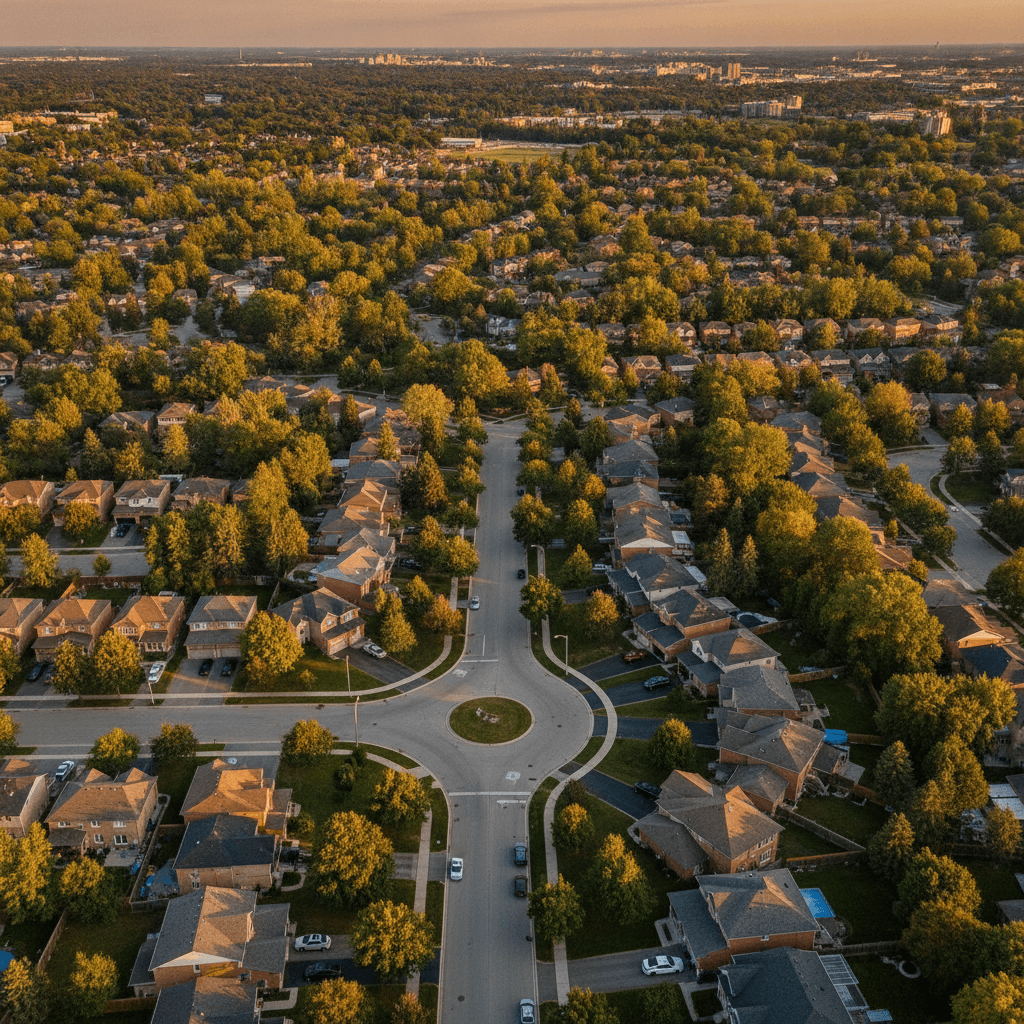
A real estate market report for sellers is a concise, data-driven summary of pricing, supply, demand, and timing signals in your local area. In Brampton, it helps homeowners decide when to list, how to price, and what to expect during showings and negotiations. Sellers use it to plan confidently and avoid guesswork.
By Maunil Shah • Last updated: 2026-07-02
At a Glance: What You’ll Learn and How to Use This Report
This guide turns raw market signals into clear seller decisions: list timing, pricing bands, and marketing focus. You’ll learn how to read supply and demand, select a pricing strategy, and prepare your home to win showings and offers—specifically for Brampton in 2026.
Think of this as your seller’s operating manual for the Brampton market. We translate market inputs into practical steps you can act on today—without jargon or guesswork.
- How to read months of inventory, days on market, and absorption rate
- When to list, how to price, and which upgrades to finish first
- How Maunil’s tools—location search, home valuation, and VIP reports—streamline decisions
- Local nuances for Brampton neighborhoods and commuter routes
- Checklists, a comparison table, and a weekly on-market scorecard
Overview
- Audience: Brampton homeowners preparing to sell
- Primary goal: Price accurately and market confidently
- Approach: Evidence-based, simple steps, local examples
- Tools you’ll use: Address-based valuation, neighborhood search, VIP reports
Table of contents
- What is a seller market report?
- Why it matters in Brampton (2026)
- How to build your report (step-by-step)
- Types of seller reports and when to use them
- Best practices for pricing, timing, and marketing
- Tools and resources for Brampton sellers
- Case studies and local examples
- FAQ
- Key takeaways
- Conclusion & next steps
What Is a Real Estate Market Report for Sellers?
A seller market report is a compact analysis of local pricing, supply, demand, and time-to-sell indicators. It explains what similar homes achieved, how quickly they sold, and where your home should be positioned today to attract qualified buyers.
In our experience helping Brampton homeowners, a strong report removes emotion from pricing and backs up decisions with facts. It highlights three pillars: where the market is, where it’s trending, and how your home fits in right now.
Core metrics you’ll rely on
- Months of Inventory (MOI): Indicates balance between supply and demand. Lower MOI generally favors sellers.
- Days on Market (DOM): Typical marketing time. Shorter DOM usually signals stronger demand or sharper pricing.
- Sale-to-List Price Ratio: Gauges pricing accuracy and negotiation intensity.
- Absorption Rate: Pace at which listings are purchased. Higher absorption means faster turnover.
- New vs. Active Listings: Shows if supply is building or clearing.
- Showing and Offer Activity: Forward-looking demand signals gathered once listed.
When we prepare a real estate market report for sellers, we cross-check these signals against your home’s condition, upgrades, and micro-location (school catchments, commuting routes, and amenities). That’s how we determine the right pricing band and the best week to hit the market.
Why This Report Matters in Brampton in 2026
Brampton sellers face dynamic conditions in 2026. A clear report shows whether you should price for speed or for maximizing value, which week to launch, and which improvements move the needle in your neighborhood.
Here’s the thing: markets shift, but your plan shouldn’t. With a structured report, you’ll know if buyer demand is concentrated in specific price bands, if supply is tightening or easing, and how long listings like yours typically take to secure firm offers.
- Timing clarity: Weekly listing volumes and DOM help you pick an optimal launch window.
- Negotiation leverage: A data-backed price turns “curious” showings into committed offers.
- Upgrade prioritization: Target updates that influence photos, first impressions, and appraisals.
- Risk control: Spot red flags early (spiking MOI, extended DOM) and adjust tactics fast.
Local considerations for Brampton
- Leverage commuter access: Listings near the Williams - Zum Bovaird Station Stop SB often appeal to transit-minded buyers; spotlight convenient routes and travel times.
- Seasonal pacing: Spring and early fall typically see stronger showing counts; if launching mid-winter, double down on lighting and warm staging cues.
- Micro-location clues: Proximity to Torbram Rd at Williams Pky bus routes can broaden buyer pools; include transit and amenity highlights in your remarks.
How to Build Your Seller Market Report (Step-by-Step)
Build your report by gathering comparable sales, tracking supply and demand, and aligning strategy to your home’s condition. Use an address-based valuation, a neighborhood search, and a weekly checklist to refine price and timing before you list.
We keep this simple and actionable. You’ll compile a clear snapshot in about an hour—and refine it with fresh data each week you’re on market.

Step 1: Baseline your home
- Address-driven valuation: Use Maunil’s “What’s My Home Worth?” tool for a fast baseline and confidence range.
- Feature inventory: Note bed/bath count, finished basement, parking, lot, and recent upgrades.
- Condition grade: Be honest about paint, flooring, lighting, and curb appeal. These affect DOM.
Step 2: Map the competitive set
- Active listings: Pull 5–10 actives that a buyer would compare with yours.
- Recent sales: Select 5–10 truly comparable sales from the last 90–180 days.
- Near misses: Include 2–3 listings that failed to sell to learn from mispricing.
Step 3: Read the market trend
- Supply vs. demand: Track MOI and absorption directionally (tightening or loosening).
- Velocity: Check median DOM bands for your price range.
- Signals: Are sale-to-list ratios stable, compressing, or expanding?
Step 4: Choose your pricing lane
- Speed lane: Price to lead the pack; aim to capture early showings and reduce carrying time.
- Value-max lane: Price near the top of the comp range with superior presentation.
- Test-and-tune lane: Start in the middle with tight feedback loops.
Step 5: Prep to outperform comps
- Staging priorities: Lighting, paint, flooring touch-ups, and curb appeal photographs best.
- Media: Pro photos, floor plans, and a compelling feature sheet drive qualified showings.
- Listing remarks: Lead with unique benefits (commute, schools, parks, finished basement).
Step 6: On-market scorecard (weekly)
- Inputs to track: Impressions, saves, showings, feedback, and offer activity.
- Thresholds: If views are high and showings lag, improve media. If showings are high and offers lag, align price.
- Adjustments: Refresh photos, tweak remarks, or re-align price band based on feedback.
Types of Seller Reports and When to Use Them
Use a quick snapshot for go/no-go decisions, a trend report for timing, and a micro-neighborhood report for pricing bands. On-market weekly updates help you pivot faster than competing listings.
Not every situation needs a 30-page package. Choose the lightest-weight version that still supports a confident decision.
Snapshot CMA (Comparative Market Analysis)
- When: Early planning or pre-renovation decisions.
- What’s inside: 5–10 comps, pricing band, and staging priorities.
- Outcome: Clear go/no-go decision and a working price range.
30/60/90 Trend Report
- When: Choosing the best launch window.
- What’s inside: Rolling averages of MOI, DOM, and sale-to-list ratios.
- Outcome: Confidence on which week to go live.
Micro-Neighborhood Focus
- When: Unique properties or tight price bands.
- What’s inside: Only 0.5–1 km comps; highlights of transit, schools, and amenities.
- Outcome: Tighter pricing band and remarks that resonate.
On-Market Weekly Brief
- When: After you list.
- What’s inside: Showings, feedback, online engagement, and competitor changes.
- Outcome: Faster, smarter pivots to secure a firm deal.
Best Practices for Pricing, Timing, and Marketing
Pick a pricing lane, launch with premium media, and adapt weekly. The best sellers lead on presentation, collect feedback quickly, and align price bands to current buyer demand—especially within the first two weeks.
Here are field-tested moves we recommend to Brampton homeowners preparing to sell. The goal is simple: outcompete similar listings by being clearer, cleaner, and easier to buy.

Pricing and timing moves
- Lead early: Listings earn peak attention in week one—be photo-ready and correctly priced.
- Watch bands: Align price with buyer search brackets to avoid being filtered out.
- Spring and fall: Historically busy periods; in off-peak seasons, double down on media and staging.
Presentation that sells
- Light and bright: Neutral paint and LED temperature consistency improve photography and in-person feel.
- Declutter zones: Entry, living, kitchen, and primary suite get priority.
- Feature sheet: Summarize upgrades, warranties, mechanical ages, and utility highlights.
Marketing rhythm
- Media drop: Release photos, floor plan, and a teaser reel at launch.
- Feedback loop: Collect showing notes within 24 hours; fix friction points fast.
- Neighborhood signals: Track nearby new listings and price changes to stay competitive.
Comparison table: Pricing strategy vs. buyer response
| Strategy | Typical Buyer Pool | Expected Activity | Risk | When to Use |
|---|---|---|---|---|
| Speed lane | Largest | High showings early | Leaving money on table if demand spikes | Time-sensitive moves or relocation |
| Value-max lane | Selective | Moderate, quality-focused | Longer DOM if market softens | Unique features and superior finish |
| Test-and-tune | Balanced | Steady, adjustable | Might lag if feedback is slow | Uncertain bands or shifting trends |
Tools and Resources for Brampton Sellers
Use Maunil’s address-based valuation to set a baseline, the neighborhood property search to study your competition, and VIP market reports for deeper trend context. Together, these tools shape a confident pricing plan.
We designed our toolkit to remove friction for sellers. You can baseline value, check comparable activity, and review weekly signals—all before your photos are booked.
- What’s My Home Worth? Quick, address-based valuation to establish a working range and confidence interval.
- Location-based property search: Scan active listings by neighborhood to see how buyers will compare options.
- VIP seller reports: Curated trend snapshots and checklists so you can focus only on what matters.
For additional perspectives on market preparation and regional context, explore a few third-party guides as thought-starters, such as a Toronto market overview, this concise seller preparation guide, and a walkthrough on selling your own home. Use them as complementary viewpoints while we tailor a Brampton-specific plan.
Free 15-minute seller consult: Want a custom real estate market report for sellers? Book a quick call and we’ll outline timing, pricing bands, and a staging punch list for your home.
Maunil Shah • HomeLife/Miracle Realty Ltd., Brokerage • Brampton
Case Studies and Local Examples
Local examples show how small shifts—pricing lane, photo order, or remarks—change results. These composite scenarios mirror common Brampton listings and the decisions that improved outcomes.
We’ve distilled patterns we see when working with sellers across Brampton. Consider how these playbooks might apply to your home and micro-neighborhood.
Family detached near transit
- Context: A well-kept detached home within easy access of the Williams - Zum Bovaird Station Stop SB.
- Challenge: Several similar actives competing in the same price band.
- Move: Speed lane pricing with premium twilight photos and floor plan.
- Result: Strong early showings and clean offer terms within a short window.
Semi-detached with recent upgrades
- Context: Cosmetic refresh, improved lighting, and a finished basement.
- Challenge: Mixed comps—some renovated, some original condition.
- Move: Test-and-tune lane with aggressive remark updates based on feedback.
- Result: Balanced traffic, then a decisive adjustment that aligned with buyer search filters.
Townhome on commuter corridor
- Context: Easy access to Torbram Rd at Williams Pky bus routes and shopping.
- Challenge: Higher MOI in the segment than the detached market.
- Move: Value-max lane with standout staging, kitchen polish, and lifestyle photos.
- Result: Fewer but higher-quality showings, followed by firm terms.
Frequently Asked Questions
Sellers ask about timing, pricing confidence, and what to do if showings are slow. These concise answers align with the playbooks in this guide and help you decide next steps quickly.
How often should I update my seller market report?
Update it weekly while preparing and during the first month on market. Track showings, feedback, and nearby listing changes. If engagement slows or a competing home lists nearby, revisit your media, remarks, and price band to stay aligned with current demand.
What if my home is unique and comps are scarce?
Use a wider time window for sales and tighten the radius to your micro-neighborhood. Focus on buyer benefits—lot, layout, and upgrades—then pick a pricing lane. Staging and premium media help educate buyers when direct one-to-one comps are limited.
How long should I wait before adjusting price?
Make small adjustments only after real feedback. If views are high but showings lag, improve photos and remarks first. If showings are steady but offers stall, a price alignment may be warranted—especially after two weekends of activity without viable offers.
Do I need professional staging for every home?
Not always. Prioritize high-impact zones—entry, living, kitchen, and primary suite. Light, neutral paint and consistent lighting often outperform heavy prop staging. The goal is a bright, calm canvas that photographs beautifully and makes in-person tours feel spacious.
Key Takeaways
Price with data, launch with strong media, and adapt weekly. Sellers who align to buyer search bands and lead early in week one consistently outperform similar listings.
- Use a real estate market report for sellers to turn local signals into a clear pricing lane.
- Focus on presentation—light, photos, floor plans, and concise remarks win attention.
- Track weekly engagement and adjust fast to stay competitive.
- Lean on local expertise to interpret MOI, DOM, and absorption in your segment.
Conclusion & Next Steps
Selling with confidence starts with a focused report and a clear pricing strategy. When the plan is grounded in local data, your listing moves faster and negotiates cleaner.
If you’re preparing to sell in Brampton, we’ll assemble a practical, custom seller report for your home. We’ll baseline value, map comps, and recommend a launch window and staging punch list. Ready to move? Book a discovery session in Brampton and let’s plan your market debut.